Spring in Cornwall: Bluebells, Microclimate Gardens and the Quiet Shoulder Season

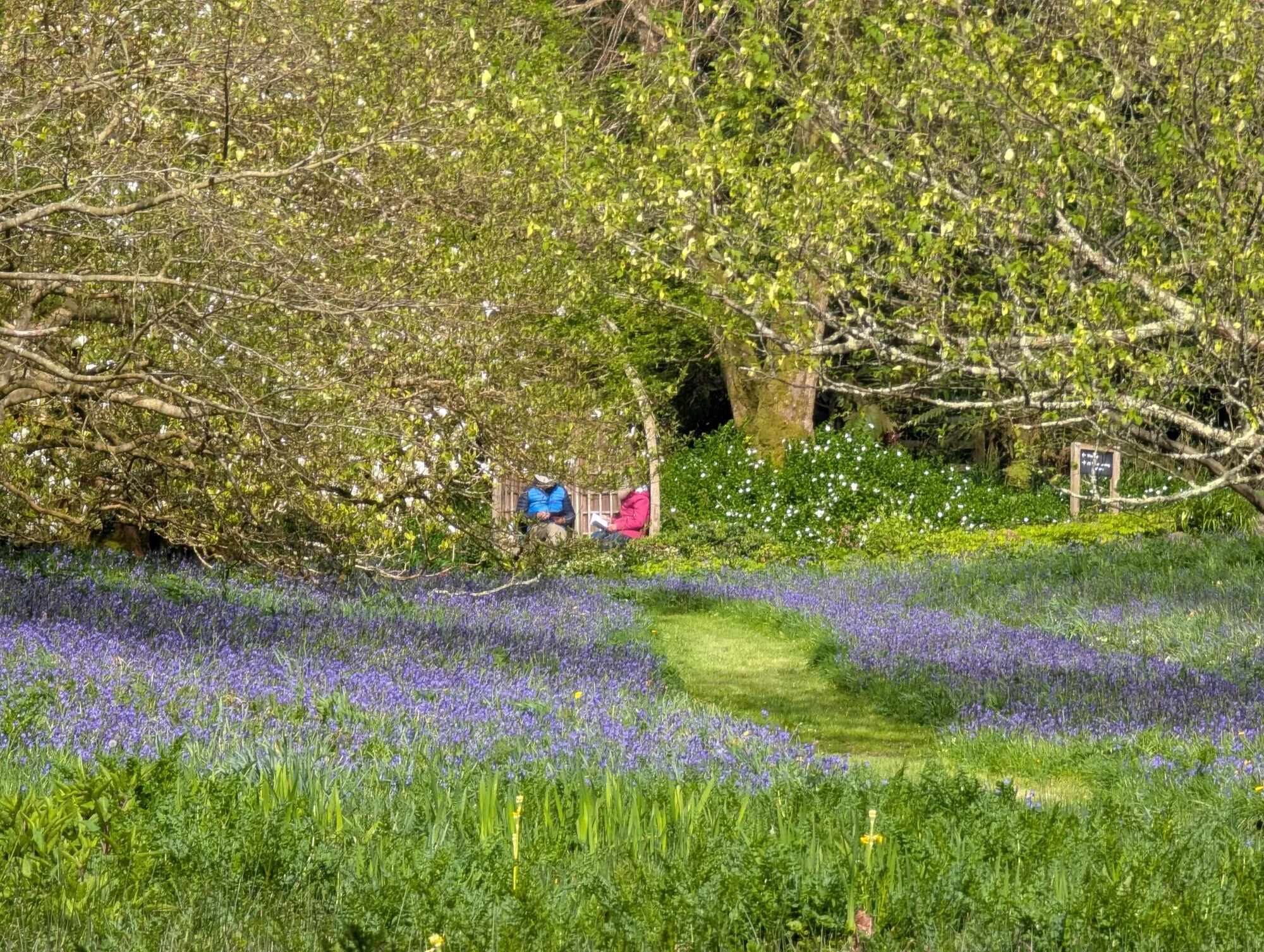
Cornwall in spring is the season the locals quietly prefer. The gardens are at their best, the skies are at their clearest, the beaches are still empty, and the towns are properly awake again after winter. A south-coast microclimate gets the magnolias and rhododendrons flowering weeks before the rest of the UK; the bluebells fill the National Trust valley gardens at Glendurgan and Trebah from mid-April; Cornwall's national day on the 5th of March kicks the season off with parades and flags. The summer crowds have not arrived, and you can have a beach to yourself on a weekday morning even at Easter.
This is the case for visiting Cornwall in spring, and the things actually worth doing while you are here.
Why spring is Cornwall's best-kept shoulder season
Spring in Cornwall is undersold for one reason: the people who know it want to keep it to themselves. Summer gets the headline coverage. Autumn gets the romantic press. Winter is enjoying its own quiet renaissance. Spring sits between them, doing more of the things people actually come to Cornwall for, with fewer of the people.
The headline arguments:
- The gardens are at their peak. Glendurgan, Trebah, Trelissick, Caerhays and Heligan all peak between March and May.
- The microclimate is the engine. Cornwall's south coast blooms weeks before the rest of the UK.
- The beaches are properly empty outside Easter week and the May bank holidays.
- The sea is finally swimmable for the brave, in a wetsuit, from late April.
- The light is exceptional. Spring clarity gives the long-distance views and the long evenings.
- The seasonal calendar starts here: St Piran's Day, the Falmouth Spring Flower Show, the National Trust gardens opening their full programmes.
A spring visit is the visit that surprises people. It is not a winter consolation prize.
The microclimate that does the heavy lifting
You cannot understand Cornish spring without understanding the south-coast microclimate. Three things combine:
- The Gulf Stream warms the seas around Cornwall, particularly the south coast. The sea is rarely below eight degrees Celsius even in late winter.
- Low altitude and shelter from the spine of higher ground inland keep northerly weather off the south coast.
- The result: frost is rare and short-lived; sub-tropical plants thrive; Cornish springs run two or three weeks ahead of the rest of England.
The microclimate is why the great Cornish gardens exist. Glendurgan, Trebah, Trelissick and Caerhays were all planted in the 19th century by Cornish gentry who realised they could grow things here that wouldn't survive anywhere else in Britain. Tree ferns, gunneras the size of umbrellas, palms, magnolias, sub-tropical rhododendrons from the high Himalayas. The microclimate carried the experiment; the gardens are still doing it nearly two centuries later.
For more on the year-round weather see our Cornwall and Falmouth weather guide.
Bluebells, magnolias and rhododendrons in the National Trust gardens
The gardens are the headline spring act. Four of them cluster within half an hour of Falmouth:
- Glendurgan Garden on the Helford River: a wooded valley garden falling to the river at Durgan, world-famous for its bluebell carpet in the valley floor from mid-April through early May. Magnolias, camellias and rhododendrons earlier. A 19th-century laurel maze, sub-tropical planting throughout.
- Trebah Garden next door to Glendurgan, also on the Helford: another valley garden, bluebells, magnolias, and the famous giant gunneras that hit full size by early summer.
- Trelissick twenty minutes north on the Carrick Roads: more open than the Helford gardens, with views across the river, rhododendrons and azaleas from April.
- Caerhays Castle Gardens further east towards Mevagissey: most famous for its magnolia collection, which peaks in March, plus rhododendrons and camellias.
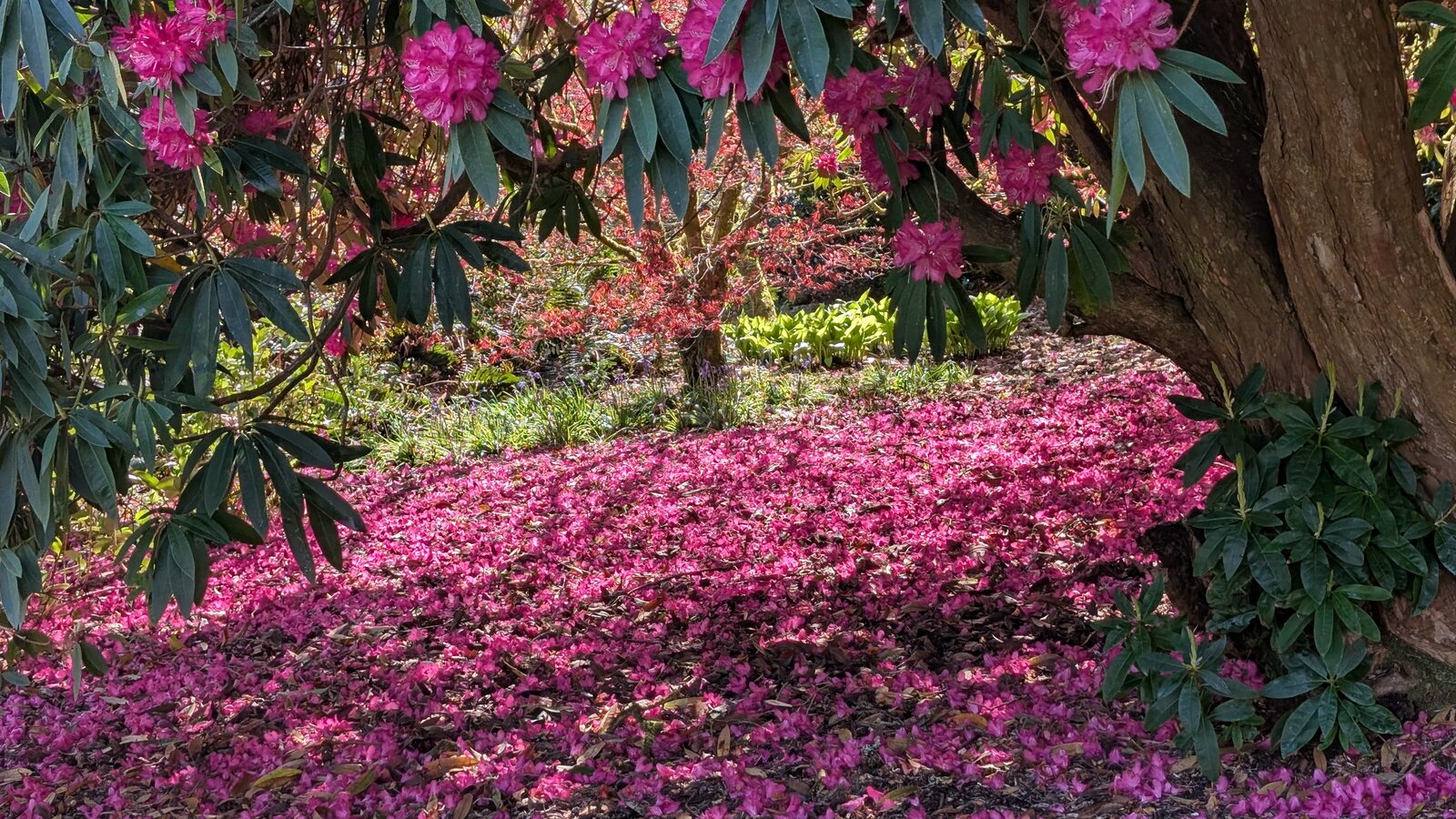
For the wider National Trust picture across Cornwall, see our National Trust guide to Cornwall. The Lost Gardens of Heligan also peak from late spring onwards.
Tip: arrive early on a weekday for the bluebell weeks at Glendurgan and Trebah. Both gardens get busy by lunchtime on a sunny April Saturday. Mid-morning during the week is the sweet spot.
Spring at Trewena
The microclimate works on the Penryn side of the estuary too. Spring at Trewena brings daffodils, bluebells in the lanes, blackthorn blossom in the hedgerows, the first swallows back, and the slow business of the cottage gardens coming back to life. Late March through May is the long bright phase: long evenings on the patios, the firepits used again, blossom on the apple trees in the orchard.
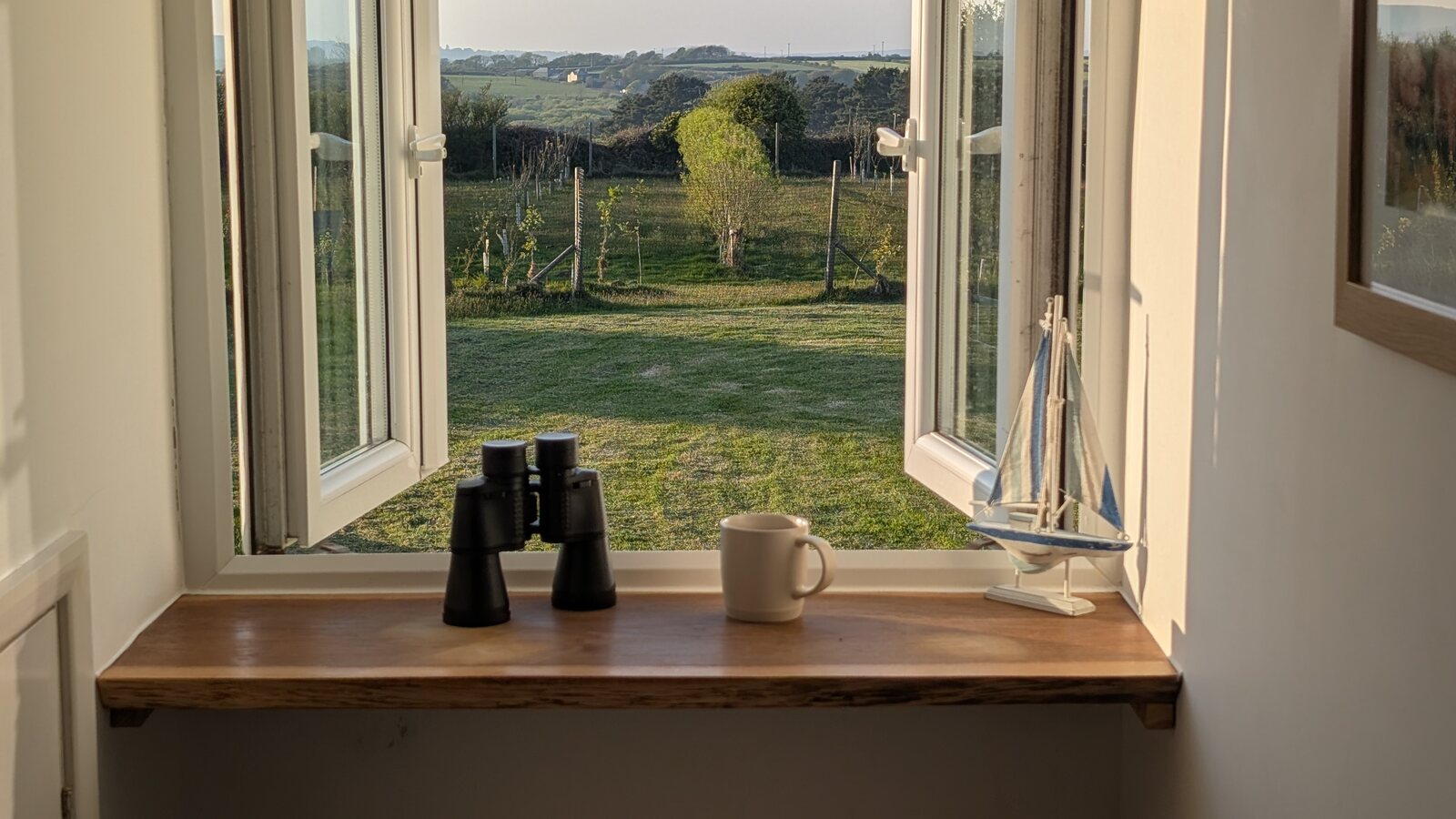
For the longer Trewena spring rhythm, see also our Cornwall in autumn for couples piece for the matching shoulder-season feel from the other end of the year.
Clear skies and the quality of light
Spring is when Cornwall's light is at its sharpest. Low humidity, clear air, long horizons. The kind of conditions where you can see St Anthony's Head lighthouse across Falmouth Bay from Pendennis Point, the silhouette of the Lizard from the cliffs above Maenporth, and on the rare exceptional day the lighthouse at Wolf Rock fifteen miles offshore from the cliffs of Penwith.
For couples and photographers, this is the season the views actually deliver on the brochure. The Pendennis Point view sits over a much-bluer sea in spring than it does in summer; the Lizard cliffs give thirty-mile visibility on a clear April morning.
Walks that are particularly good on a clear spring day:
- The Falmouth walking tour: Pendennis Point with miles of visibility back to St Anthony's
- The Gylly, Swanpool and Maenporth coast walk: wildflowers in the cliff verges, calm sea
- The Lizard cliffs: gorse in flower, big views
- The South West Coast Path stretches near Falmouth: choose your section
Spring beaches and first sea swims
The beaches in spring are the same beaches as in summer, just emptier and prettier.
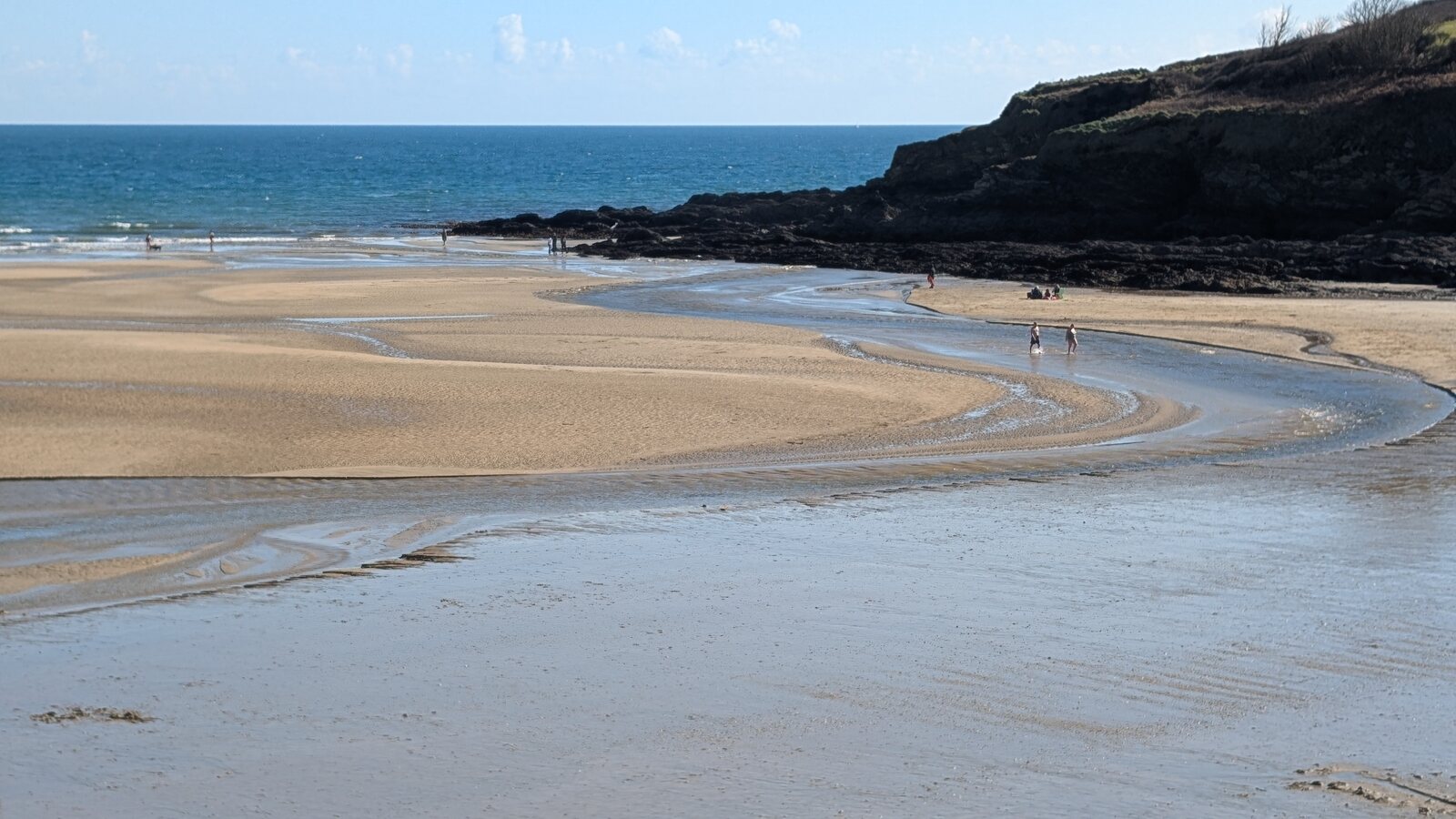
Walking-only beach days work brilliantly in March and April: the cliff paths, the empty sands, the seal-and-seabird-watching that the summer crowds drown out. By May the sea is swimmable with a wetsuit if you are committed; without a wetsuit, only for the dedicated cold-water community.
For the year-round wild swimming detail see our wild swimming spots in Cornwall guide. For the spring beach shortlist:
- Gyllyngvase Beach in Falmouth: the year-round swimming community is here; coffee at Gylly Cafe afterwards
- Maenporth: smaller, sheltered, often empty in spring
- Swanpool: small bay with the lake behind, very quiet outside summer
- Castle Beach: rockpools at low tide, particularly good on a sunny April afternoon
- Kynance Cove on the Lizard: famous, busy in summer, quiet in spring
- The hidden beaches and coves of the wider south coast
For more on the local options see best beaches near Falmouth.
St Piran's Day, the 5th of March
The spring season opens with St Piran's Day on the 5th of March. St Piran is the patron saint of Cornwall (and of tinners, the medieval tin-miners). The day is Cornwall's national day, and is marked across the county with flags, parades and pub gatherings.
The headline events:
- The St Piran's procession at Perranporth: a costumed walk across the dunes to the site of St Piran's Oratory (a 6th-century chapel, the oldest surviving Christian building in mainland Britain). The defining St Piran's Day event.
- Truro's procession through the city centre, ending at the cathedral square
- Falmouth's celebrations in the town centre with the Cornish flag flying everywhere
- Pubs across Cornwall running Cornish-music nights, Cornish-themed menus, and pouring more Cornish beer than usual
For visitors, St Piran's Day is a strong start to a long weekend in Cornwall. The weather may not be balmy in early March, but the welcome is properly Cornish.
For the year-round Falmouth events calendar see our Falmouth events guide.
The Falmouth Spring Flower Show
The Falmouth Spring Flower Show, organised by the Cornwall Garden Society, is one of the largest spring horticultural shows in the South West. Held annually in Falmouth, typically in April.
Competitive classes for cut flowers, container plants, daffodils, magnolias, rhododendrons and camellias from the great Cornish gardens, plus floral-arrangement classes, trade stands, garden-design talks, and the chance to buy from specialist Cornish nurseries that do not show their stock anywhere else. A major fixture for spring gardeners across Cornwall and beyond.
Check the Cornwall Garden Society website for current dates, venue and ticket details (the show has moved venues over the years and the spring date moves a little with the bloom).
A spring weekend in Falmouth: a quick itinerary
For a long-weekend visit in spring, the natural shape:
- Friday afternoon: arrive, settle in, a long-weekend dinner in town
- Saturday morning: Glendurgan or Trebah in the bluebell weeks, a half-day at the garden, a leisurely lunch
- Saturday afternoon: the Falmouth walking tour or a coast walk from Gylly
- Saturday evening: a gig at the Cornish Bank or dinner over the water at the harbour-front
- Sunday morning: a pizza-and-beer afternoon at Verdant or a day trip to St Mawes by ferry
- Sunday late afternoon: a beach walk at Maenporth or Castle Beach before dinner
- Monday morning: a slow breakfast and the drive home
For the longer slow-couples version see Cornwall for couples and a long weekend in Cornwall for couples.
When to come in spring: month by month
- March: daffodils, magnolias, early camellias, St Piran's Day on the 5th. Cool but improving weather; the locals are coming out of winter. Quieter than April.
- April: bluebells in the gardens and the lanes, rhododendrons starting, the Falmouth Spring Flower Show. Easter week is the only busy stretch. The classic Cornish spring month.
- May: bluebells finishing, late rhododendrons and azaleas, the first sea swims in a wetsuit, the longest evenings of the year so far. May bank holidays bring crowds; mid-week is the sweet spot.
For the year-round picture see our winter in Cornwall guide, autumn visit guide and reasons to visit Cornwall in winter for the seasonal companion pieces.
More for your spring visit
- Glendurgan Garden: the headline bluebell garden on the Helford
- Lost Gardens of Heligan: the historic restored garden that peaks late spring
- National Trust guide to Cornwall: all the gardens and properties
- Falmouth events guide: for St Piran's Day, the Flower Show and the year-round calendar
- Falmouth walking tour: the four-mile town itinerary, perfect on a clear spring day
- Cornwall for couples: the slow-Falmouth shape for a spring weekend
- Best beaches near Falmouth: the walkable spring beach shortlist
- Wild swimming spots in Cornwall: for the brave first dip
- Cornwall and Falmouth weather guide: for the spring weather detail
- Winter in Cornwall: best things to do: the matching shoulder-season piece
- Cornwall in autumn for couples: the autumn sibling piece
Tags
Stay in touch
Occasional Cornwall updates from Rich at Trewena. Around four times a year, never more.
Planning a trip to Cornwall?
Three one-bedroom cottages on a smallholding on the edge of Falmouth. A genuine Cornish base for couples and singles.