Kynance Cove: A Visitor's Guide to Cornwall's Most Photographed Beach

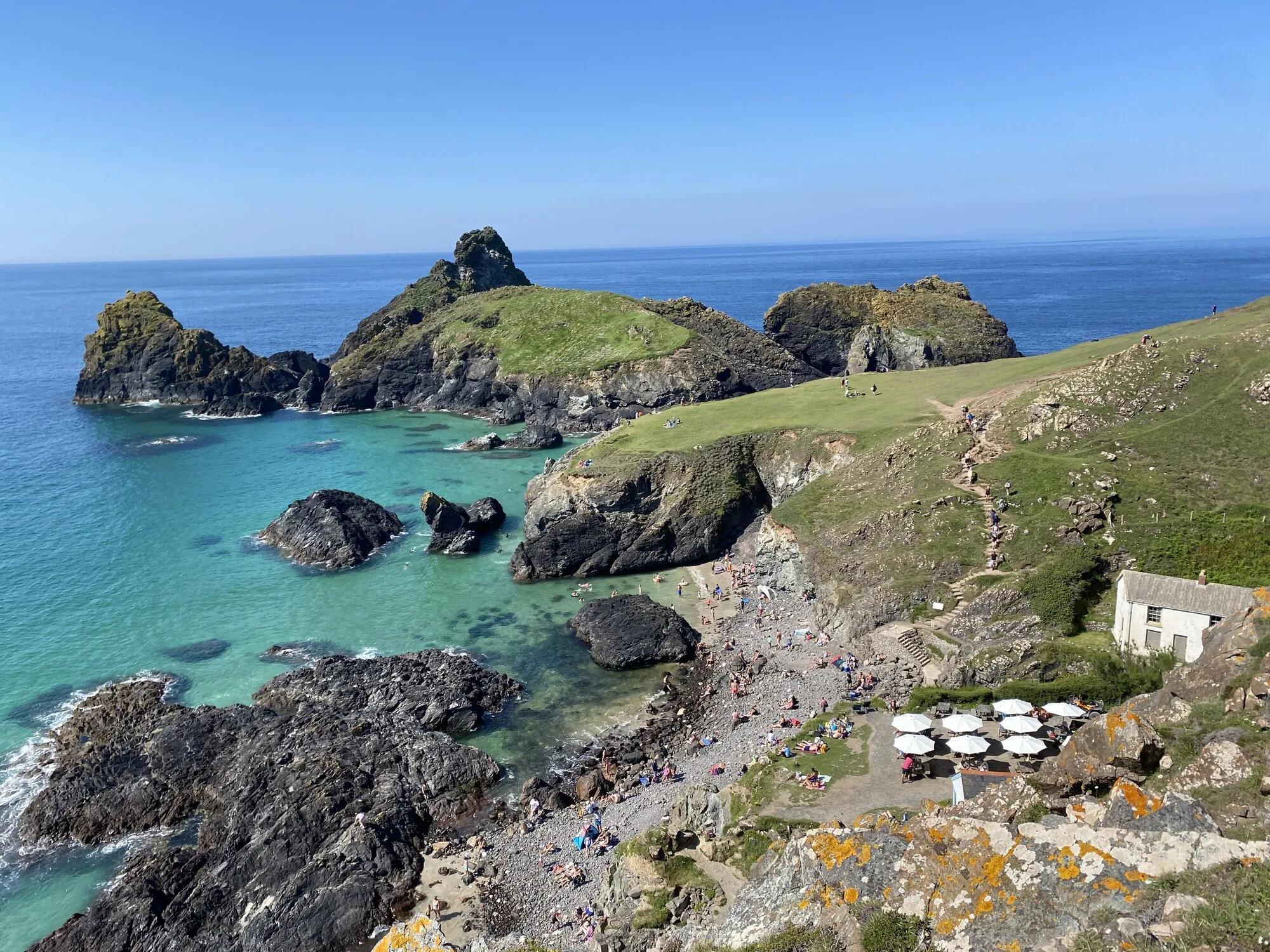
Kynance Cove is one of Cornwall's most photographed beaches, and on a sunny low-tide afternoon it lives up to every postcard. Turquoise water, dramatic dark serpentine sea stacks rising from the bay, white sand and rock pools at low tide, and a sheltered cove framed by some of the most distinctive geology in mainland Britain. It is the picture-postcard Lizard, and worth the cliff-path walk to reach it.
This is a guide to visiting: how to get there, when to go, what to know about the tide, and how to make a proper half-day of it.
Where it is
Kynance Cove sits on the western side of the Lizard Peninsula, the southernmost peninsula of mainland Britain. From Falmouth it is around an hour by car: A39 south, A394 to Helston, then A3083 south through the Lizard towards Lizard Point. Kynance is signposted off the main road about a mile and a half before Lizard village.
The National Trust car park sits on the clifftop above the cove. From there, a steep but well-maintained cliff path descends to the beach, taking about 10 minutes down (and 15-20 minutes back up).
The cove itself is only fully exposed at low tide. At high tide, the beach mostly disappears and the cove becomes a much smaller and rockier visit. Check tide tables before going. The classic Kynance photograph (turquoise water, white sand, sea stacks) is a low-to-mid-tide scene.
What makes Kynance famous
Three things give Kynance its reputation as one of the most photographed beaches in Britain:
The water. The turquoise colour is genuinely unusual for the British coast: saturated, clear, and more reminiscent of Mediterranean or Caribbean water than the muted tones most UK beaches have. The clarity comes from the white sand and the sheltered geology of the cove.
The serpentine sea stacks. Asparagus Island, The Bishop, The Bellows and the smaller stacks rise dramatically from the bay, all built of the dark serpentine rock that the Lizard is geologically famous for. They give the cove its distinctive silhouette and make every photograph feel composed.
The white-sand-and-rock-pools at low tide. As the water drops, hidden caves, tunnels and rock pools emerge between the stacks and the beach. Walking the exposed sand and exploring the caves at low tide is half the visit; the other half is just sitting and looking.
Kynance has been a tourist destination since Victorian times, when the railway brought the first visitors to the Lizard. Tennyson, the Prince of Wales (later Edward VII) and countless Victorian writers wrote about it. The popularity has not faded; if anything, social media has turned the cove into one of the most photographed locations in Cornwall.
Visiting practicalities
Parking: The NT car park is the only option. Paid for non-members, free for National Trust members. An NT membership pays for itself fast across a Cornwall holiday. The car park fills by mid-morning in summer; arrive before 10am or come outside school holidays for the easiest run.
Cliff path: A clearly marked but steep path down from the car park, taking around 10 minutes to descend and 15-20 to return. Steps in places. Moderately challenging for those with mobility issues; not buggy- or wheelchair-accessible.
Toilets: at the car park (clifftop), open all year.
Cafe: the Kynance Cove Cafe, a small whitewashed building just above the beach steps, serves coffee, breakfast, light lunches and Cornish-leaning specials. Seasonal (typically late spring through early autumn). Gets busy at peak lunchtime; arrive early or late.
Tide: essential to check before visiting. The cove is much smaller and the beach access more limited at high tide. Use tidetimes.org.uk or any tide-table app, and aim for low or mid-tide.
Lifeguards: Kynance is not RNLI lifeguarded. The currents around the rock stacks can be strong at certain tides, and the rocks themselves are sharp underfoot. See our seaside safety guide before any swim. The nearest lifeguarded summer cover is at Polurrian or Poldhu Cove further north.
When to visit
Late spring through early autumn (May to September) for the colour and the warmth. The turquoise water shows best on bright days; an overcast Kynance is still beautiful but lacks the postcard punch.
Time of day matters. Sunrise and late-afternoon light are most photogenic; midday in summer can be harsh and crowded. The cliffs above the cove face roughly south, so the cove holds light through most of the day.
Tide matters more. Aim for low to mid tide for the full beach experience. High-tide visits are still worthwhile (the cliff views remain spectacular) but you will not see the famous sand-and-stacks scene.
Crowd-management. The cove gets busy in school holidays and on bright weekends. Arrive before 10am or after 4pm for the easiest visits. Midweek out of school holidays is much quieter. Winter is calm but the cliff path can be slippery in wet weather.
What else to do nearby
Kynance pairs naturally with the wider Lizard:
- Lizard Point itself, the southernmost tip of mainland Britain, is 10 minutes by car. The lighthouse, the cliff walks east towards Cadgwith, and the small lookout cafe.
- Cadgwith is 15 minutes east, a small fishing village on the eastern side of the Lizard with a different, working-coast atmosphere.
- Dollar Cove and Church Cove at Gunwalloe are 15 minutes north, twin NT beaches with the famous clifftop church.
- Mullion Cove and Polurrian Cove are between Kynance and Gunwalloe, both worth a stop.
- Helston is 25 minutes north for lunch and the famous May-time Furry Dance.
For a fuller Lizard day, see our Lizard one-day road trip and hiking the Lizard Peninsula guides.
Beyond Kynance
For day-trip itineraries from a Falmouth base:
- A long weekend in Cornwall for couples covers the Lizard day-trip option in detail.
- The best places to stay in Cornwall for the wider regional context.
- The best beaches near Falmouth for the closer Falmouth Bay alternatives.
- Cornwall's hidden beaches and coves for less-visited Lizard alternatives.
- The National Trust guide to Cornwall for the wider NT car park network.
For tickets, opening hours and current car-park rates, the National Trust Kynance Cove page is at nationaltrust.org.uk/visit/cornwall/kynance-cove.
Tags
Stay in touch
Occasional Cornwall updates from Rich at Trewena. Around four times a year, never more.
Planning a trip to Cornwall?
Three one-bedroom cottages on a smallholding on the edge of Falmouth. A genuine Cornish base for couples and singles.