Hiking the Lizard Peninsula: A Two-Day Coast Path Route

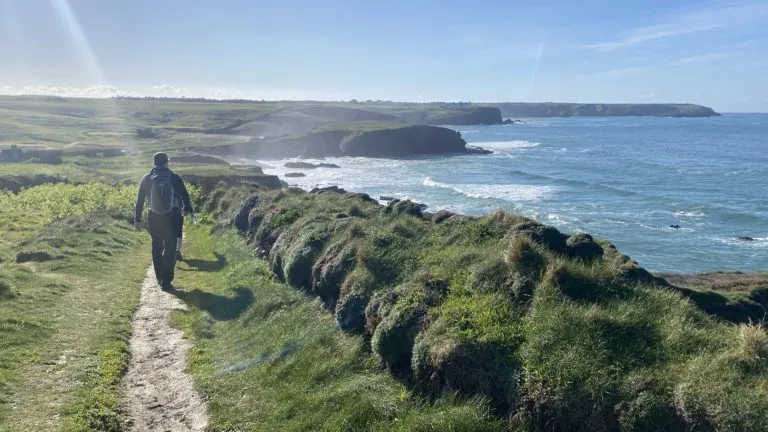
The Lizard Peninsula holds one of the most rewarding multi-day stretches of the South West Coast Path in Cornwall: 30 miles of cliffs, coves, fishing villages and Bronze Age landscape, wrapped around England's most southerly point. Most hikers split the route across two days, and that's the version this guide covers.
At a glance
- Distance: approximately 30 miles
- Days: 2 (overnight stop in Lizard village)
- Start: Loe Bar, east of Porthleven
- End: Porthallow on the eastern Lizard
- Best months: May, June, September
- Highlights: Gunwalloe's Church of Storms, Mullion Cove, Kynance Cove, Lizard Point, Cadgwith, the old serpentine works at Carleon Cove, Coverack
The route can be done in either direction. The west-to-east version puts the most dramatic stretches on day one and the quieter eastern coast on day two, which most walkers prefer.
Day 1: Loe Bar to Lizard Point
The walk starts on the National Trust Penrose Estate, dropping down to Loe Bar, the dramatic shingle bar that holds back Cornwall's largest natural freshwater lake. Atlantic on one side, mirror-still freshwater on the other. From there the path heads south through the dunes towards Gunwalloe.
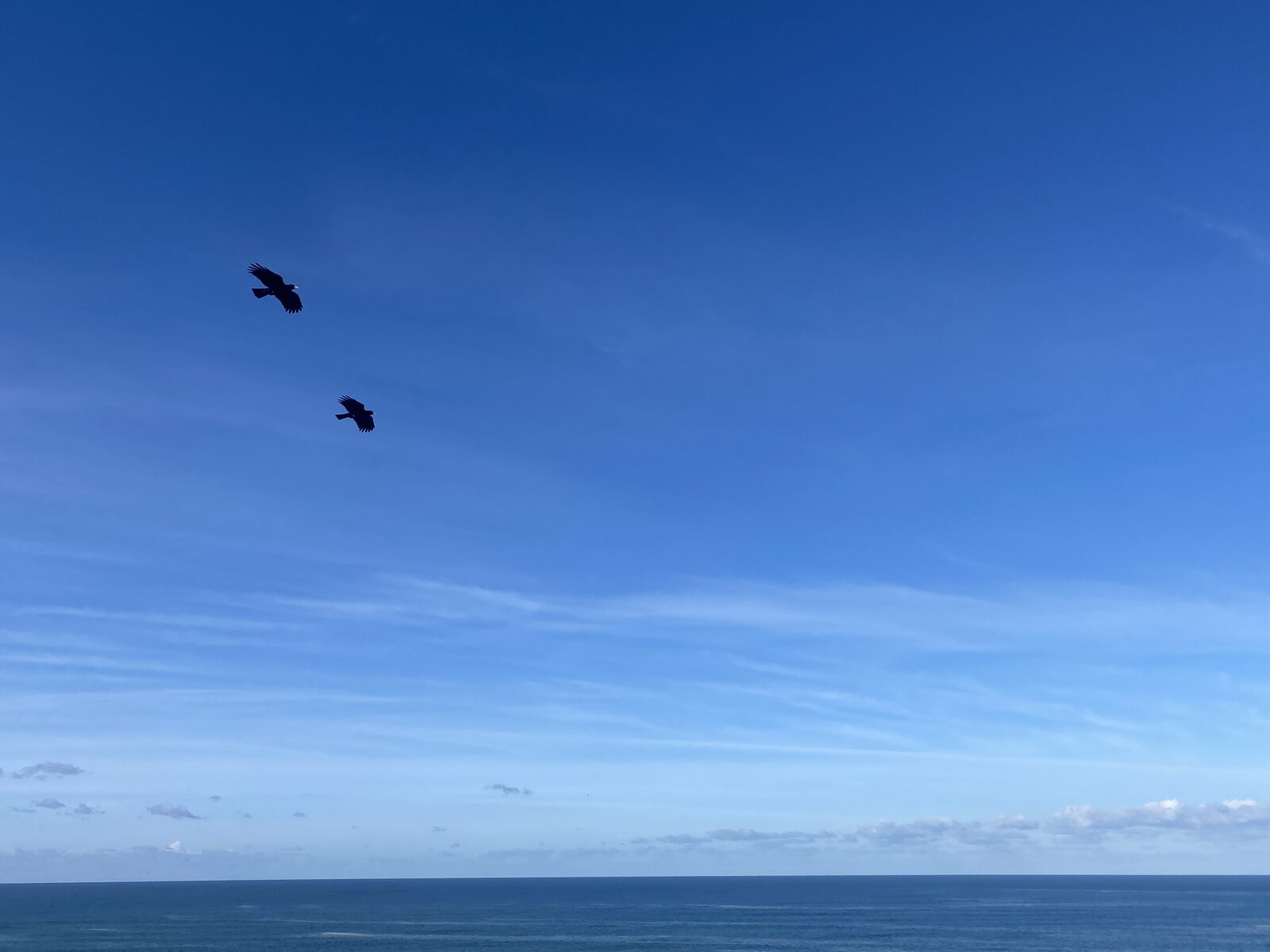
A short way in, look for choughs, the Cornish red-billed crow that features on the county's coat of arms. They were locally extinct for nearly fifty years and have only returned in the last two decades. Once rare enough to thrill any sighting, they're now a routine companion on the western Lizard cliffs.
Gunwalloe and the Church of Storms
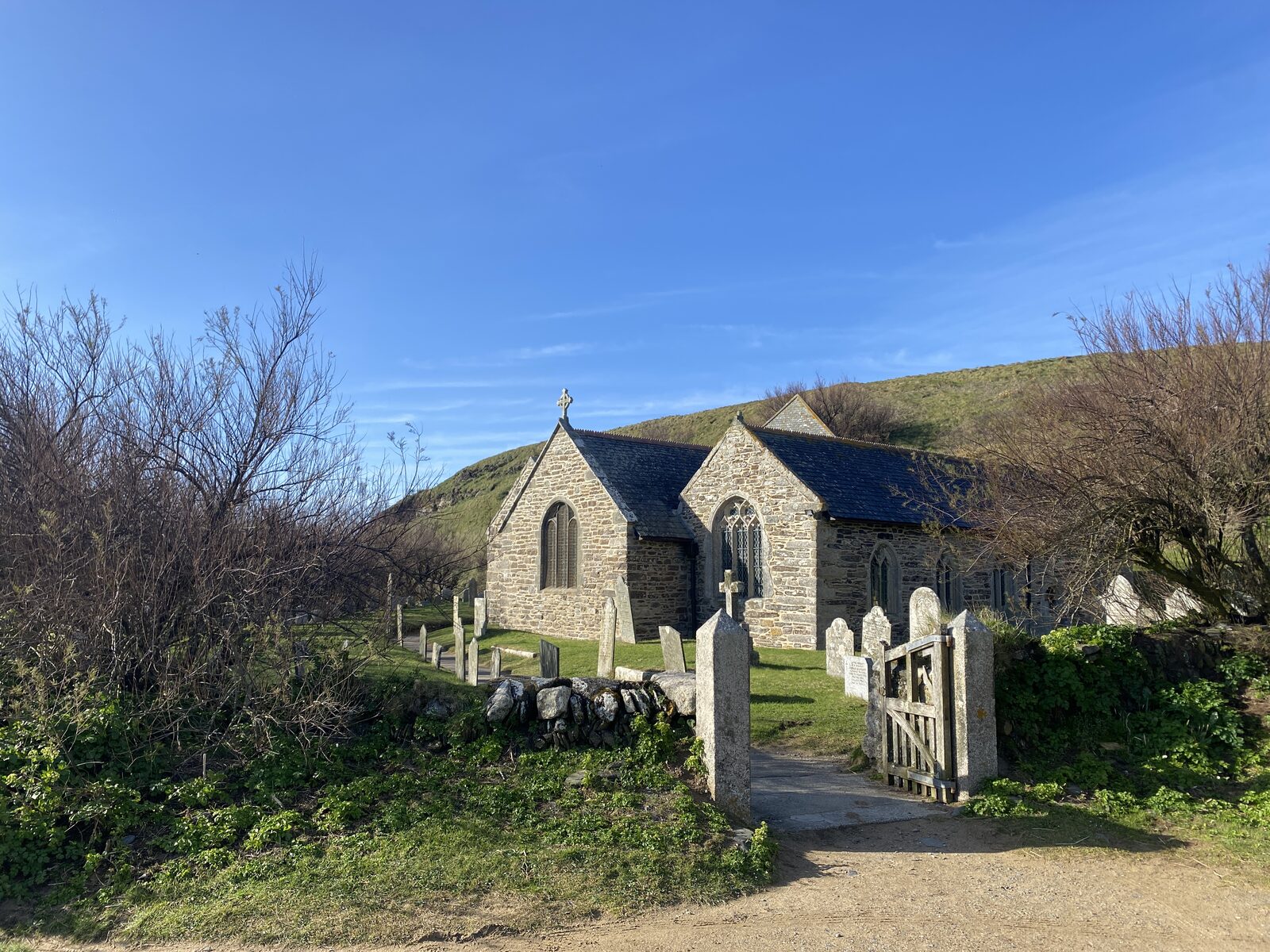
The first major waypoint is Gunwalloe Church Cove, where St Winwaloe, "the Church of Storms," sits low on the dunes overlooking a wide swathe of sandy beach. It's the only church in Cornwall actually located on a beach, named for its weather-battered position and notable for an unusual feature: the bell tower is separated from the body of the church, set into the cliff behind. Worth a look around if the door is open.
Polurrian, Mullion and Kynance
From Gunwalloe the path climbs onto the western Lizard cliffs, growing more dramatic with every headland. Polurrian and Mullion Cove come next: Mullion is a small but spectacular National Trust harbour with a 19th-century lifeboat station and sea walls built in the 1890s to shelter the small fishing fleet from westerly storms. In winter it's a popular storm-watching spot.
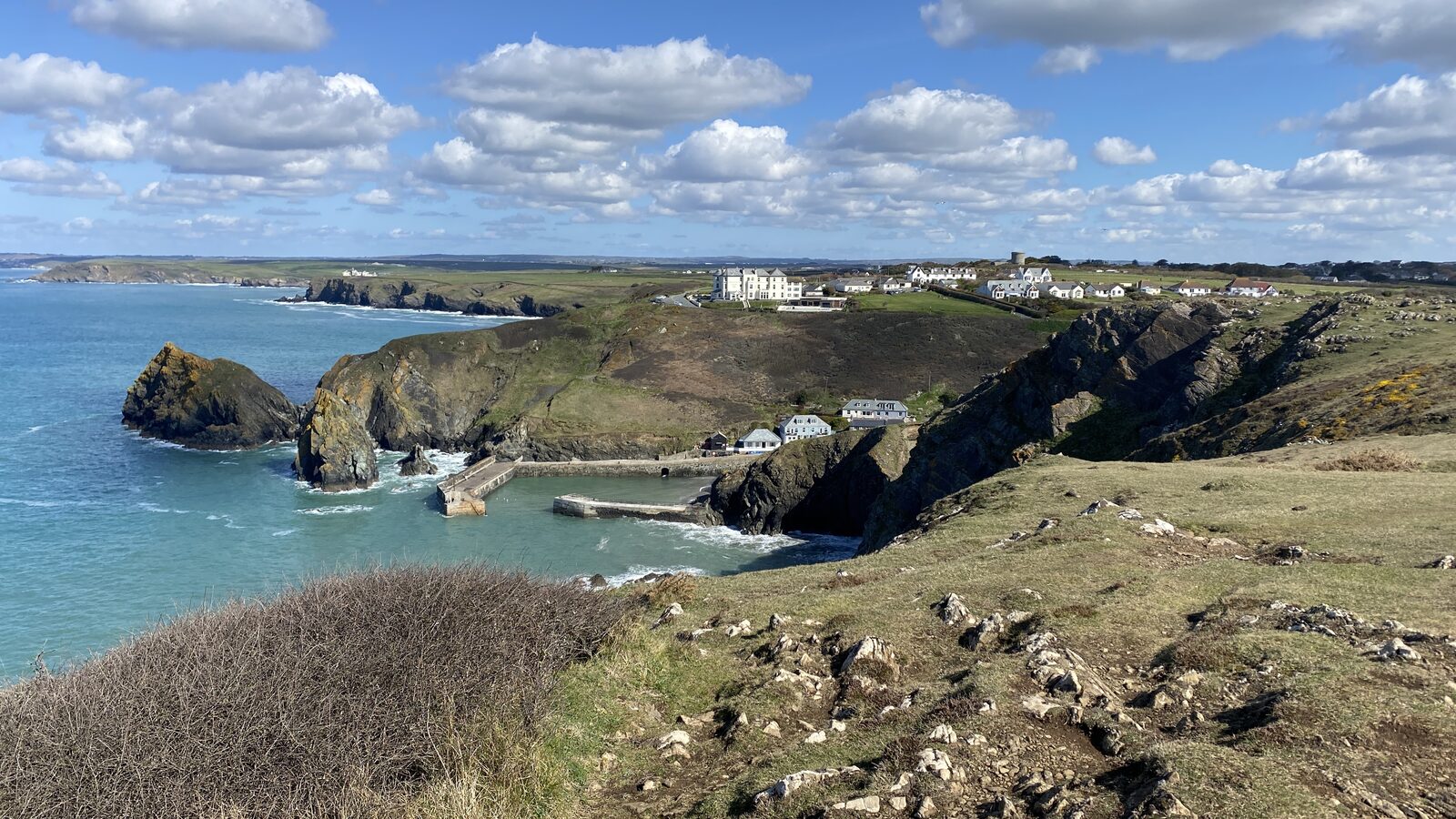
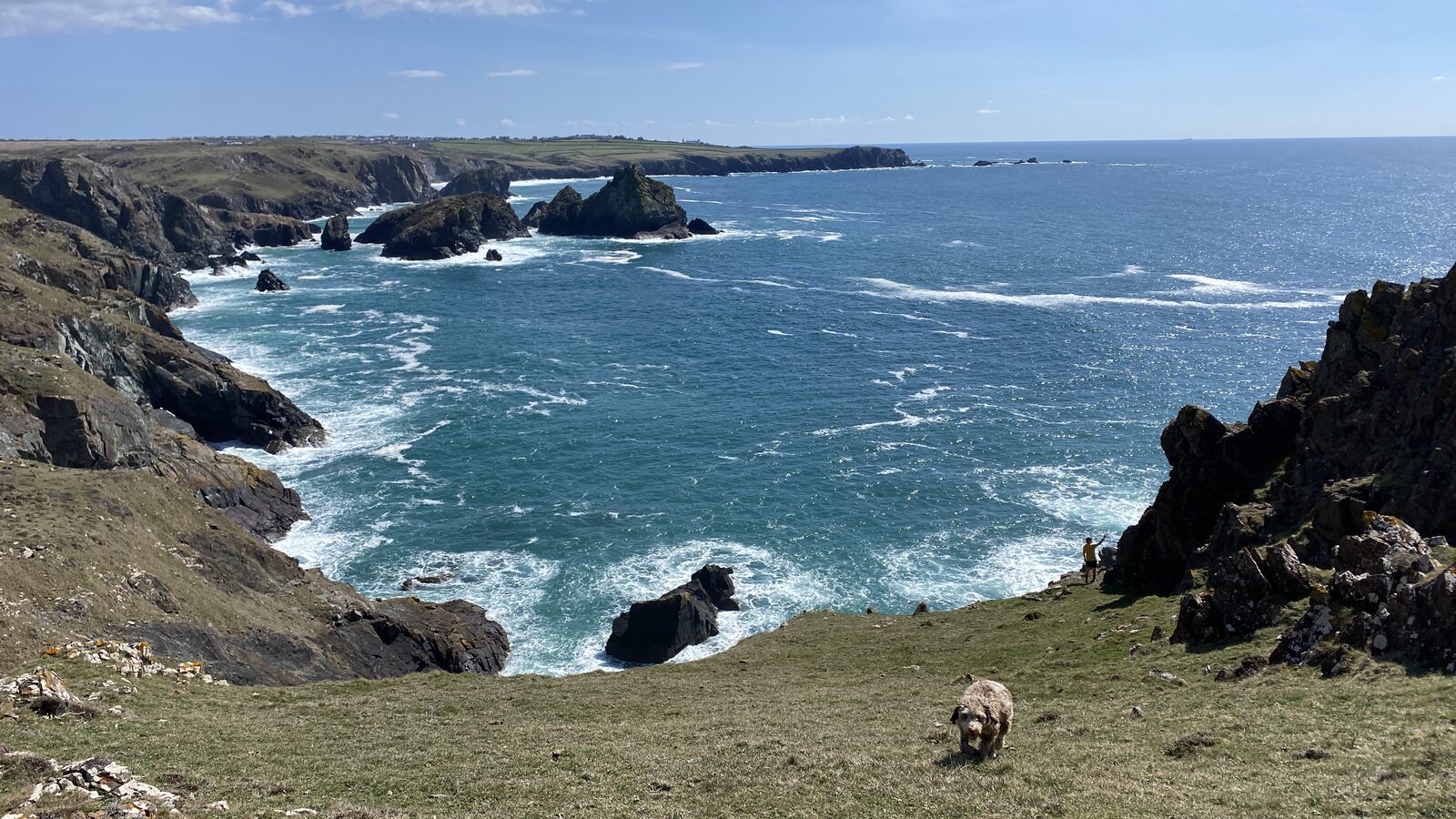
The stretch from Mullion to Kynance is the route's standout. Towering cliffs, sea caves, hidden coves, and serpentine outcrops giving the rock its distinctive green-and-red marbling. Watch for grey seals in the white water at the foot of the cliffs.
Day 1 finish: Lizard Point
By late afternoon the path reaches Lizard Point, the most southerly point of mainland Britain and the natural finish for a long Day 1. The Lizard Lighthouse has guided sailors past these waters since 1752. Nearby, the old Lizard Wireless Station is where Marconi sent some of the first long-distance wireless transmissions in 1901, a milestone in global communications. There's a cafe at the point itself, plus an old lifeboat station worth a few minutes.
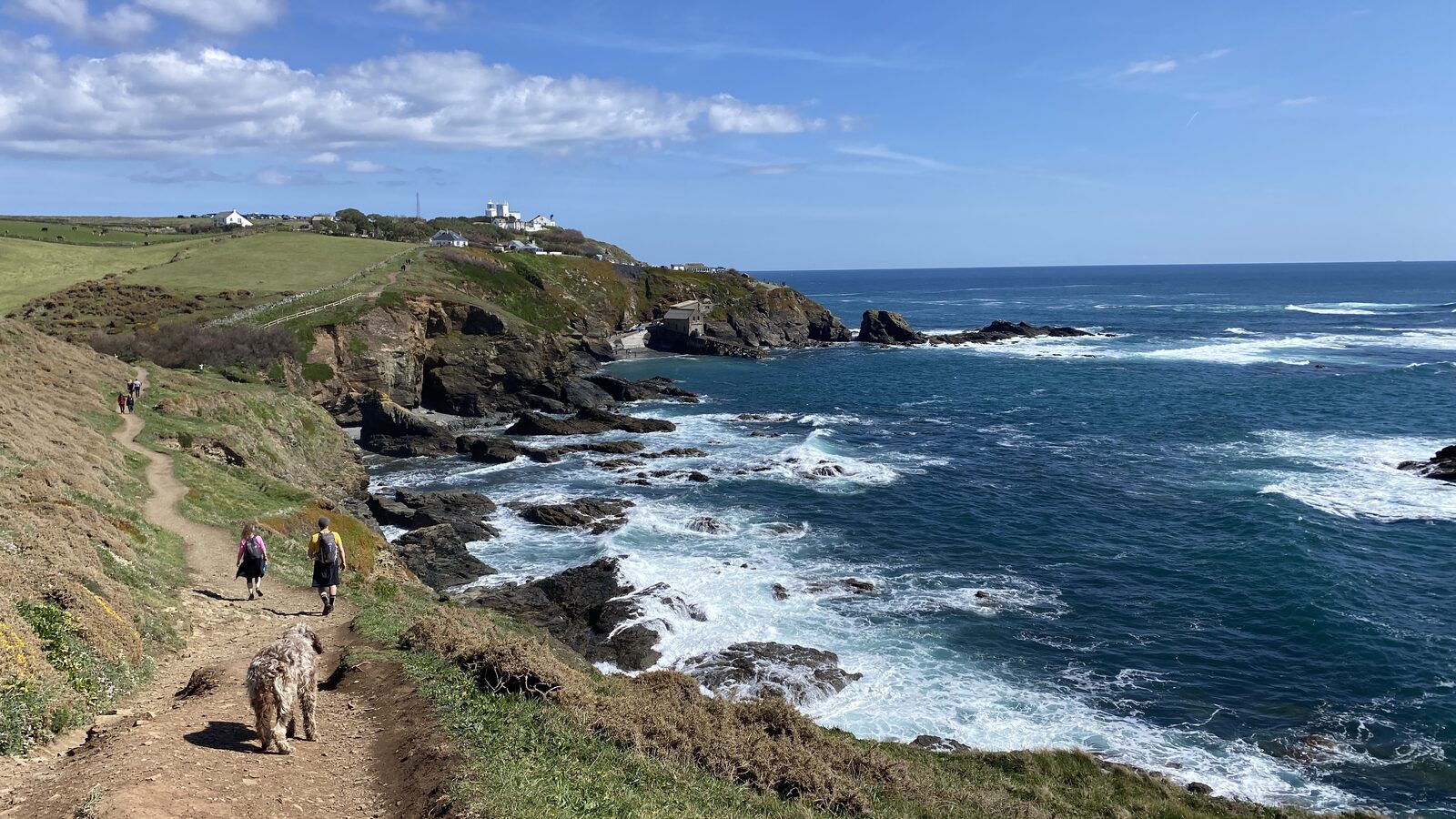
Lizard village, just half a mile inland from the point itself, is the natural overnight stop and has B&Bs, a youth hostel, the Top House Inn and Witchball Lane Cafe. Rest the legs, eat well, and prepare for a different kind of coastline tomorrow.
Day 2: Lizard Point to Porthallow
The eastern Lizard is a different kind of country. The cliffs are lower and more lush, the paths quieter, and the feel altogether more remote. Day Two is around 16 miles through some of Cornwall's most picturesque fishing villages.
Cadgwith
Two and a half miles from Lizard Point, the path drops into Cadgwith, the most photographed working fishing village on the Lizard. Thatched cottages cling to the slopes either side of a steep cove, and the small fishing fleet still operates from the slipway: pots, boats, lobster crates, the smell of salt and diesel. It's the genuine article, a working fishing community that hasn't been entirely repackaged for visitors.
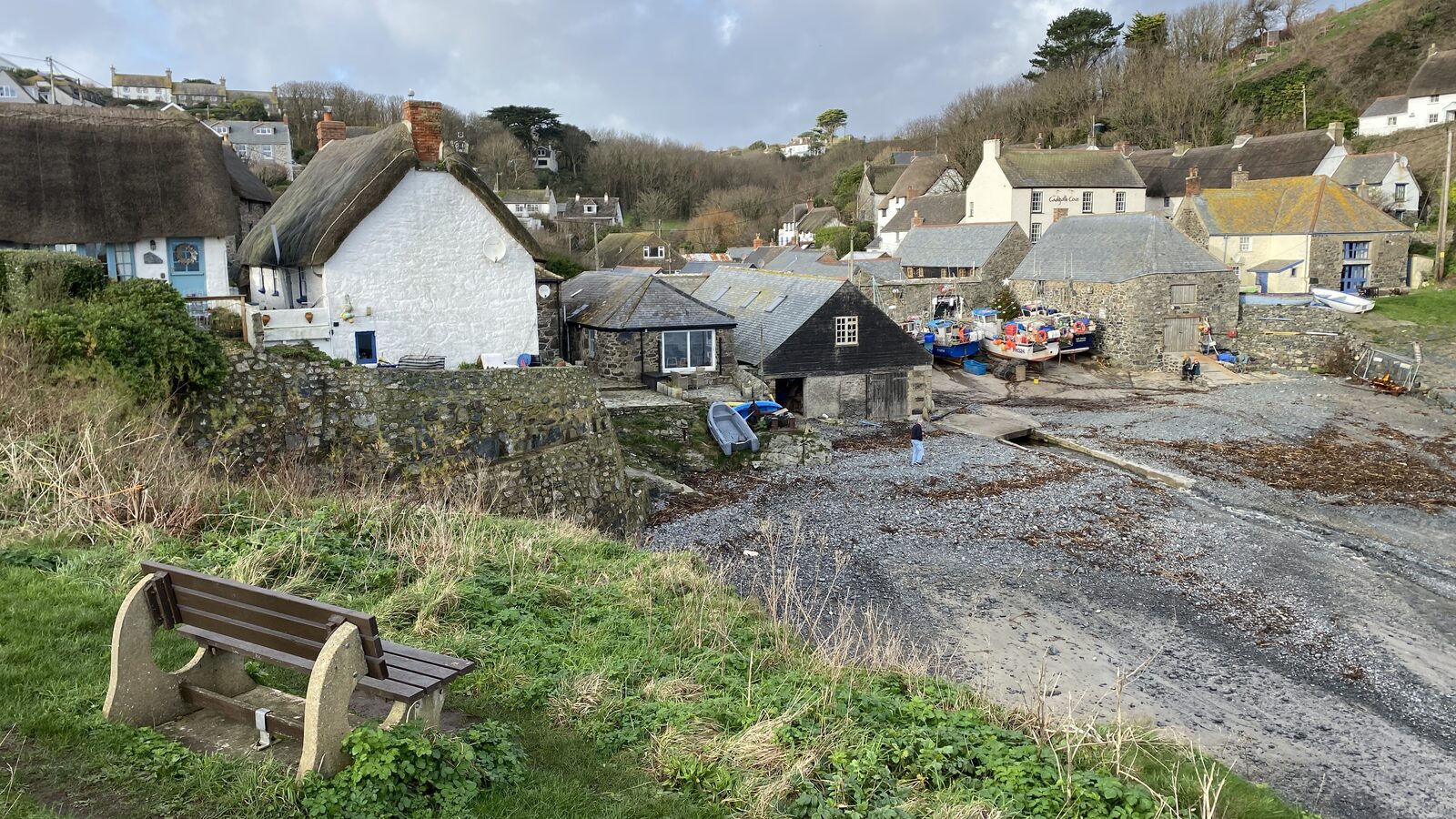
The Cadgwith Cove Inn is the natural mid-morning stop: a low-beamed local pub with the wall behind the bar covered in regulars' framed photos. If it's the right night of the week, the Cadgwith Singers will be there leading a session of Cornish songs and shanties.
A short detour from the path leads to the Devil's Frying Pan, a dramatic collapsed sea cave a few minutes south of the village where the sea churns through a narrow gap in the cliffs.
The old serpentine works at Carleon Cove
Half a mile beyond Cadgwith, the path passes through Carleon Cove at Poltesco, where the ruins of the 19th-century Lizard Serpentine Company works sit in the valley. Serpentine, with its distinctive dark colour and red-and-green veining, is a rare rock nationally but common across the Lizard. It struck a chord with Victorian fashion (Queen Victoria herself was reportedly a fan), and the factory at Carleon Cove was established in the 1850s to polish and shape it into ornaments and souvenirs.
The works initially used a large waterwheel powered by the Poltesco river, and later a steam engine. The factory closed in the 1890s as the fashion faded, and the buildings have been quietly returning to the cove ever since.
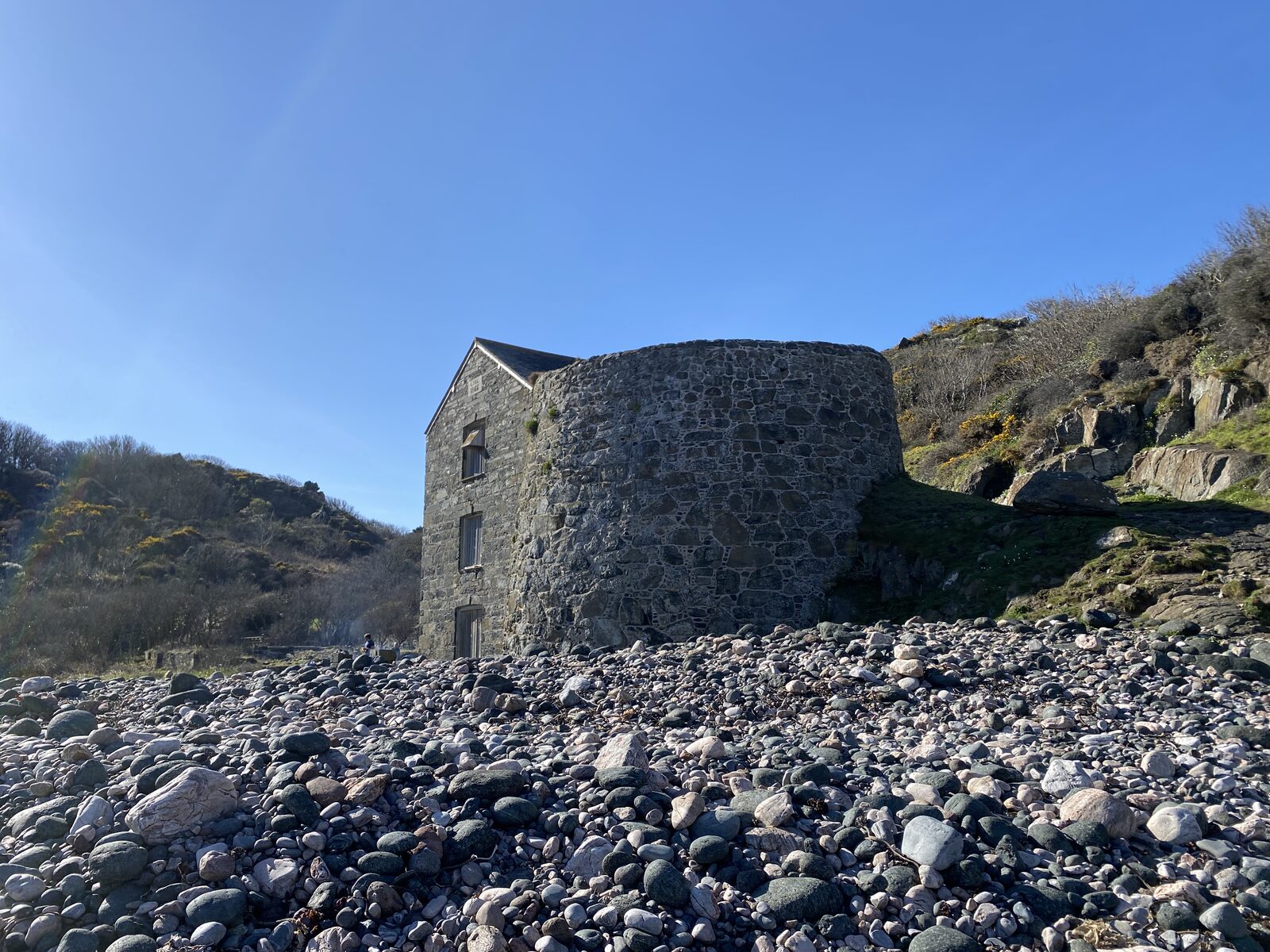
The cove itself is a pleasant lunch stop, with rock pools at low tide and a sense of layered Cornish history that's hard to find elsewhere on the path.
On to Coverack
From Poltesco the path winds through Kennack Sands (a wide, low-tide beach popular with families) and Black Head (the easternmost point of the Lizard) before dropping into Coverack. The village has a sheltered bay, one of the few safe natural harbours on this otherwise treacherous coast, and was once a centre of the pilchard fishing industry.
The whitewashed cottages, the small slipway, and the Paris Hotel on the seafront (named for the SS Paris that ran aground here in 1899) all give Coverack its distinct character. There's a beach cafe and a couple of pubs for a late lunch or a coffee. Look out for seals on the rocks on the southern side of the bay.
To Porthallow: the SWCP's halfway point
The final stretch from Coverack to Porthallow runs through some of the wilder eastern Lizard, past Lankidden Cove and Lowland Point, where you can sometimes walk for an hour without seeing another person. Watch for abandoned jetties and quarry workings at Dean Quarry near St Keverne, the dramatic remains of the area's granite-mining past.
After Porthoustock, the path winds inland and then back to the coast at Porthallow, where day two ends. Porthallow is significant for one particular reason: it's the official halfway point of the entire South West Coast Path, with a stone marker on the beach to prove it. 315 miles of path behind you (or ahead, depending on direction).
The Five Pilchards Inn at Porthallow is the natural finish-line pub: a low-ceilinged Cornish local with proper food and a fire. Time the arrival for a long, slow pint with your boots off.
Frequently asked questions
How long does it take to hike the Lizard Peninsula?
The full coast-path circuit from Loe Bar (east of Porthleven) to Porthallow on the eastern Lizard is around 30 miles and most hikers split it across two days. Day one is the dramatic western edge to Lizard Point. Day two is the quieter eastern coast through Cadgwith, the old serpentine works at Carleon Cove, Coverack, and on to Porthallow at the southern entrance to the Helford.
How hard is the Lizard coast path?
Moderately demanding. The paths are well-maintained but the coast is properly undulating, particularly the western edge between Mullion and Lizard Point. Allow 7 to 9 hours of walking per day, more if you stop properly at Kynance and Lizard Point. Sturdy footwear essential, the cliff paths can be exposed and slippery in wet weather.
Where do I start the Lizard hike?
The classic start is at Loe Bar just east of Porthleven, on the National Trust Penrose Estate. Park at the National Trust Penrose car park or Helston Fairground. From there you walk south along the bar and onto the South West Coast Path. The route can be reversed by starting at Porthallow.
Where can you stay overnight on the Lizard hike?
Lizard village, just inland from Lizard Point, is the natural midway stop with several B&Bs, a youth hostel and a couple of pubs. Cadgwith and Coverack are good alternatives for an earlier or later split. Bookings need to be made well in advance for summer weekends.
What's the best part of the Lizard coast path?
The Mullion to Lizard Point stretch on day one is widely regarded as one of the finest sections on the entire South West Coast Path. Dramatic cliffs, Kynance Cove with its turquoise water and sand bars at low tide, and the historic Lizard Lighthouse and lifeboat station at the end. The eastern coast on day two through Cadgwith and Coverack is quieter and more lush, a different but equally rewarding feel.
Can you see seals on the Lizard hike?
Yes. Grey seals are regular sightings along the western cliffs, particularly between Mullion and Kynance. Look for them basking on rocks at low tide or bobbing in the surf in the smaller coves. Choughs (the Cornish red-billed crow) are also a common sight on the cliffs, particularly near Lizard Point.
When is the best time to hike the Lizard?
May, June and September are the sweet spot for hiking the Lizard. The weather is warm enough for long days, the wildflowers and gorse are in flower in May, and the tourist crowds at Lizard Point and Kynance are manageable. Avoid the peak of August if you can. Winter is dramatic but the paths get muddy and the daylight is short.
Is the Lizard hike dog friendly?
Yes. The path is dog-friendly throughout, mostly off-lead with sensible recall on the cliff sections. Most pubs along the route welcome dogs. Some seasonal restrictions apply on the busier beaches (Kynance, Gunwalloe) in summer.
Is Porthallow easy to get back from?
Less easy than the bigger villages. Porthallow has limited public transport but the First Kernow service connects through St Keverne to Helston, with onward buses to Falmouth. A pre-booked taxi or pickup is the easier option. The Five Pilchards Inn at Porthallow can sometimes help arrange a taxi for hikers.
More walks nearby
For more multi-day routes and the broader picture, see our best South West Coast Path walks in Cornwall which picks up the Porthleven-to-Lizard stretch and points to longer epics. The Penrose Estate walk from Helston to Porthleven is a gentler 5-mile day-walk that overlaps with the start of this hike. To continue further north past Porthallow into the Helford, the Helford Passage walk picks up the next section of the SWCP.
Tags
Stay in touch
Occasional Cornwall updates from Rich at Trewena. Around four times a year, never more.
Planning a trip to Cornwall?
Three one-bedroom cottages on a smallholding on the edge of Falmouth. A genuine Cornish base for couples and singles.