Surprising Facts About Cornwall You Probably Didn't Know

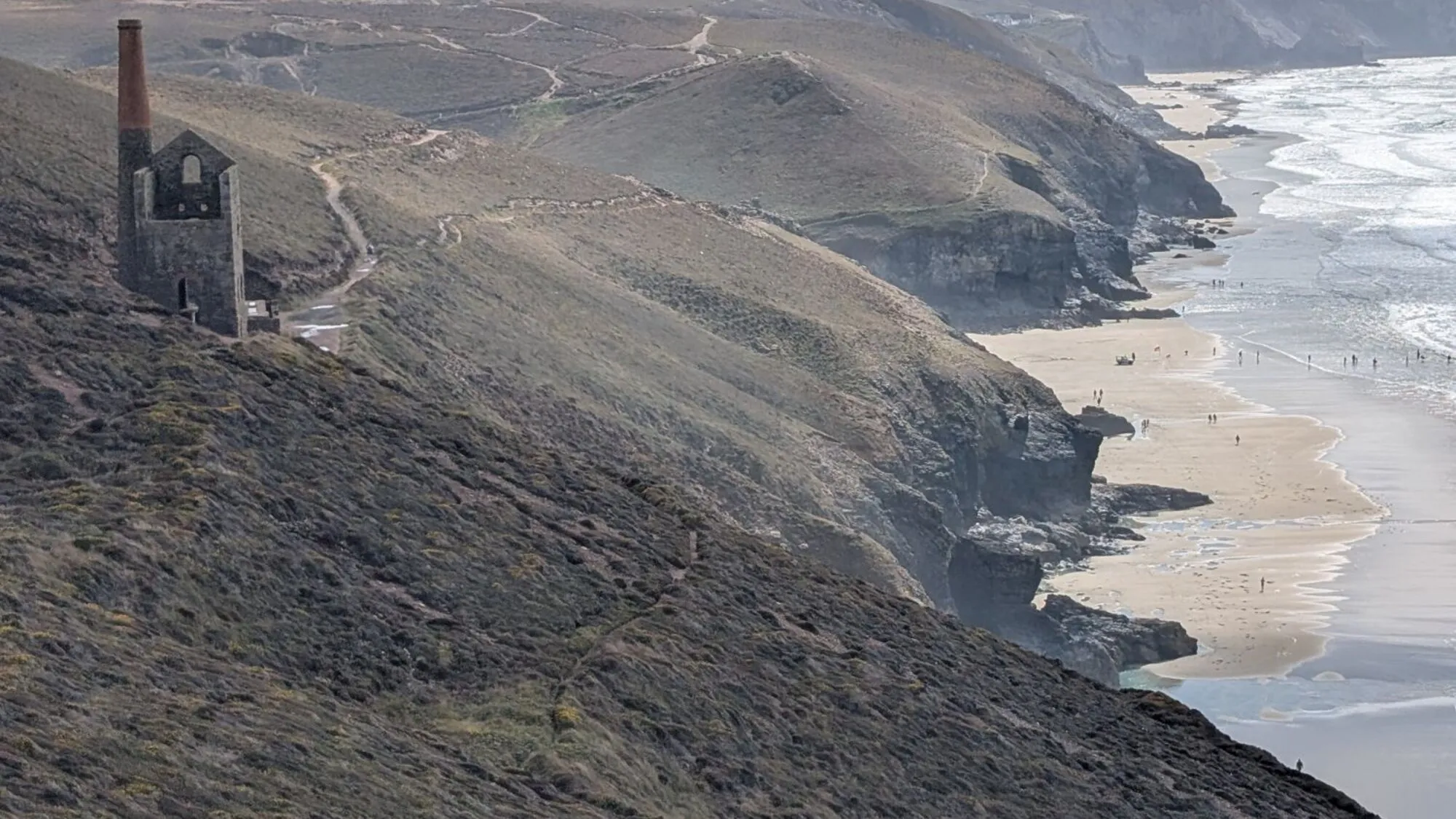
Cornwall is a place that surprises people. Beyond the beaches and the pasties, it is a county with its own language, its own flag, a hand in the invention of modern communication, and a history that turns up in the most unexpected places, including inside St Paul's Cathedral. Here are some of our favourite true facts about the corner of the world we call home.
It has its own language, flag and national day
Cornwall is one of the Celtic nations. It has its own tongue, Cornish (Kernewek), a living language related to Welsh and Breton that is enjoying a modern revival. It has its own flag, the black-and-white flag of Saint Piran, and its own national day, St Piran's Day on 5 March, patron saint of tin miners. In 2014 the Cornish were formally recognised as a national minority. Cross the River Tamar and you really are somewhere that thinks of itself as a place apart.
Marconi sent the first transatlantic radio signal from here
In December 1901, Guglielmo Marconi transmitted the first transatlantic wireless signal from his station at Poldhu, on the Lizard. The message crossed the Atlantic to Newfoundland and changed the world. The clifftop site near Mullion is marked today by a memorial, a reminder that the modern connected world got one of its first pushes from a windswept Cornish headland.
Cornish granite holds up Wellington's tomb
Cornish stone has travelled further than most Cornish people. The great sarcophagus that holds the Duke of Wellington in the crypt of St Paul's Cathedral is carved from Luxulyanite, a beautiful granite quarried at Luxulyan in mid Cornwall. The county's granite and slate ended up in landmark buildings across Britain and beyond, cut and dressed by Cornish stonemasons, including those in our own parish of Mabe.
A Cornishman invented the safety fuse
In 1831, William Bickford of Illogan invented the miner's safety fuse, a device that burned at a steady, predictable rate and made blasting rock far less deadly. It saved untold numbers of lives in mines around the world and was made in Cornwall for generations. Cornish mining know-how travelled too: hard-rock miners from here spread across the globe, giving rise to the old saying that wherever there is a hole in the ground, you will find a Cornishman at the bottom of it.
A famous war poem was written on its cliffs
Some of the most quoted lines in the English language were written on the north Cornwall coast. In September 1914, the poet Laurence Binyon sat on the cliffs near Polzeath and wrote For the Fallen, including the verse now spoken at remembrance services everywhere:
They shall not grow old, as we that are left grow old...
A plaque on the headland at Pentire marks the spot.
The Brontes' mother was Cornish
The three Bronte sisters, Charlotte, Emily and Anne, owed their Cornish half to their mother. Maria Branwell was born in Penzance in 1783 before moving to Yorkshire, where she married and raised one of the most famous families in English literature. A little of the Cornish coast, you could say, runs through Wuthering Heights.
It has a parliament that some say was never abolished
Cornwall's tin industry was once governed by its own Stannary Parliament, granted sweeping rights by royal charter to regulate the mines. The last full Stannary Parliament met in the 18th century, and whether it was ever formally abolished is a question Cornish historians and campaigners still enjoy arguing over. Either way, it is a striking reminder of just how separately Cornwall once ran its own affairs.
A world champion boxer came from Helston
Bob Fitzsimmons, born in Helston in 1863, became one of boxing's true greats: the first man ever to hold world titles at three different weights. Not bad for a blacksmith's son from a small Cornish market town.
You are never far from the sea
Cornwall is long and narrow, a peninsula reaching out into the Atlantic, which means you are never more than a short drive from the coast. The county has more than 300 beaches along roughly 400 miles of coastline, and from a central base like ours you can choose the north coast or the south by the mood of the day. It is also home to Brown Willy on Bodmin Moor, the highest point in Cornwall and, on a clear day, the only spot from which you can see both of the county's coasts at once. (More on that in our Brown Willy walk guide.)
Plan your visit
- Unusual and funny Cornish place names: the county's oddest names decoded
- Cornish superstitions and folklore: piskies, knockers and the old beliefs
- The Cornish pasty: the food that carries all this history in one hand
- Cornwall's mining heritage: the engine houses and mines behind the county's story
- The best base to explore Cornwall: why a central spot near Falmouth reaches it all
Come and collect a few surprising facts of your own. Our three cottages sit on the edge of Falmouth, a good base for the mines, the moors and the coast alike, or drop us a message about a stay.
Tags
Stay in touch
Occasional Cornwall updates from Rich at Trewena. Around four times a year, never more.
Planning a trip to Cornwall?
Three one-bedroom cottages on a smallholding on the edge of Falmouth. A genuine Cornish base for couples and singles.