Mabe, Cornwall: A Local's Guide to the Granite Parish Near Falmouth

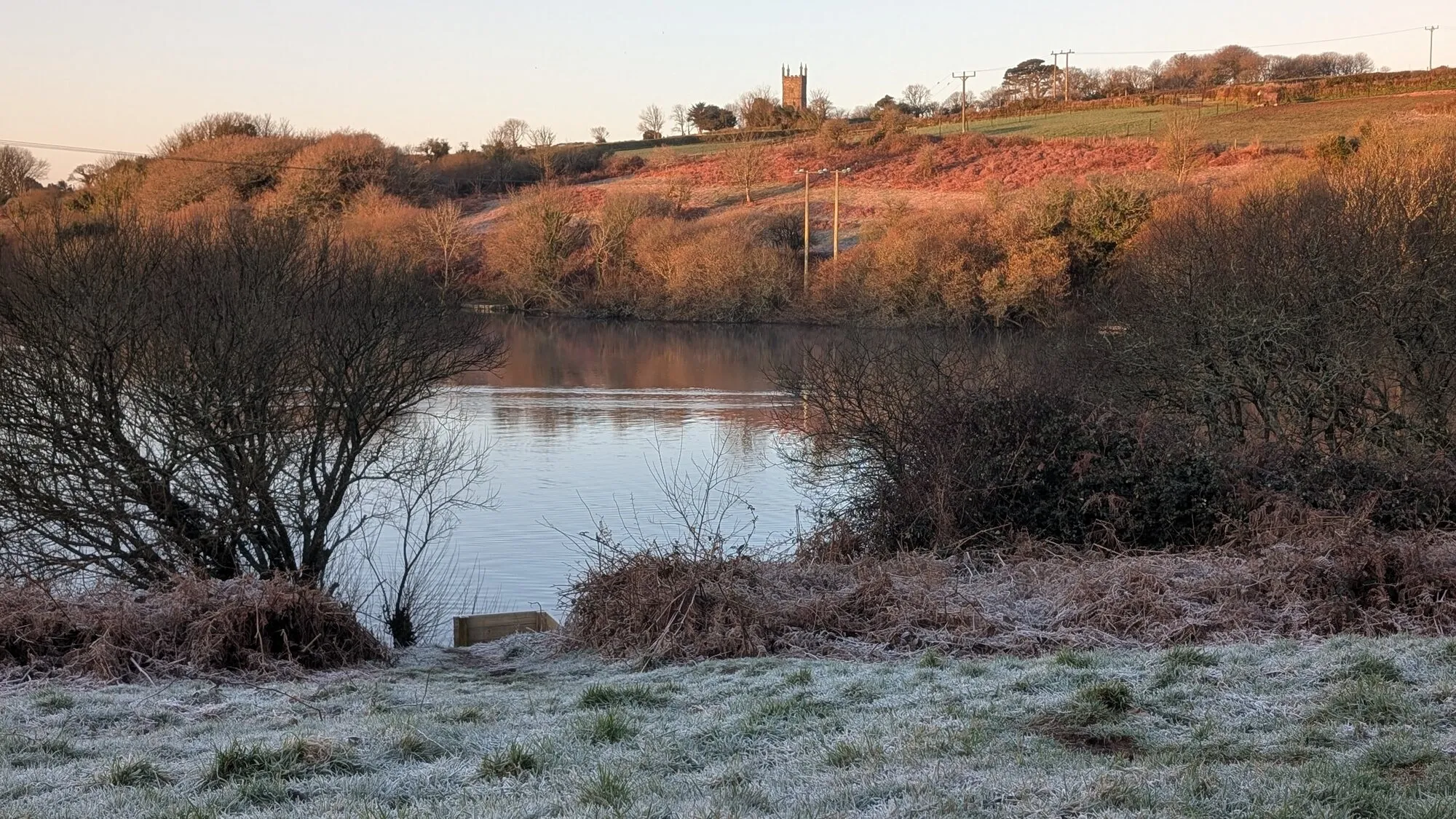
Mabe is the parish where the Trewena cottages sit. A small Cornish village on the western edge of Falmouth, with its own character and its own history. The granite that built half of nineteenth-century Britain came out of these fields. The pubs are still working pubs. The medieval church on the hill above Argal Reservoir is still the parish church. The Cornish hedges in the lanes are old enough to be ecosystems in their own right. This is the local's guide to the parish you'll actually be staying in if you stay at Trewena, and a guide to the parish in its own right for anyone passing through.
Where Mabe sits
Mabe parish sits in the wedge of countryside between Falmouth and the A394 to Helston, with Penryn three minutes north and Falmouth ten minutes east. The main village is Mabe Burnthouse, with a primary school, a pub and a village shop. The smaller hamlets (Trewoon, Halvosso, Goodygrane, Carnsew, Trenoweth) sit in the lanes around it. The whole parish is around four square miles of fields, lanes and woodland.
It is properly rural without being remote. The Falmouth seafront is ten minutes by car. Penryn waterfront is five. Truro is twenty-five minutes north on the A39. Cornwall's bigger destinations (the Lizard, St Michael's Mount, the Helford gardens, the Eden Project) are all within a forty-minute drive.
The granite parish
Mabe was historically one of the most important granite-quarrying parishes in Cornwall. The Penryn-area granite trade boomed through the nineteenth century. Quarries at Mabe Burnthouse, Trenoweth and Polvere produced a hard, fine-grained granite that was exported through Penryn's quay to every part of the British Empire and beyond.
The headline destinations for Cornish granite from this part of the county:
- London: stretches of the Thames Embankment, parts of Tower Bridge's masonry, Waterloo Bridge piers, sections of Trafalgar Square
- Lighthouses around the British coast: Wolf Rock, Bishop Rock, the Smalls, Longships
- Harbour walls and piers from Devonport to Liverpool and across the Empire
- Overseas engineering: the Singapore graving dock and other Victorian projects abroad
By the late Victorian period the export trade ran into hundreds of thousands of tonnes a year. The quarries are mostly closed now (some reopened for specialist work), but the landscape is still shaped by the industry: spoil heaps, abandoned working faces, the bridges and lanes carved out to move stone. The most dramatic legacy is the disused quarry now home to Via Ferrata Cornwall, where you can climb on the very rock faces the quarrymen left behind.
The granite at Trewena
The granite is still everywhere in the parish if you know what to look for. The cottages at Trewena are built from local granite blocks. The bench in the orchard is a slab on top of a granite cube quarried within a mile of the cottages. The drystone wall by the lane is granite. The mounting block by the gate is granite. The old gateposts in the field corners, the stiles, the field boundaries: all granite, all local.
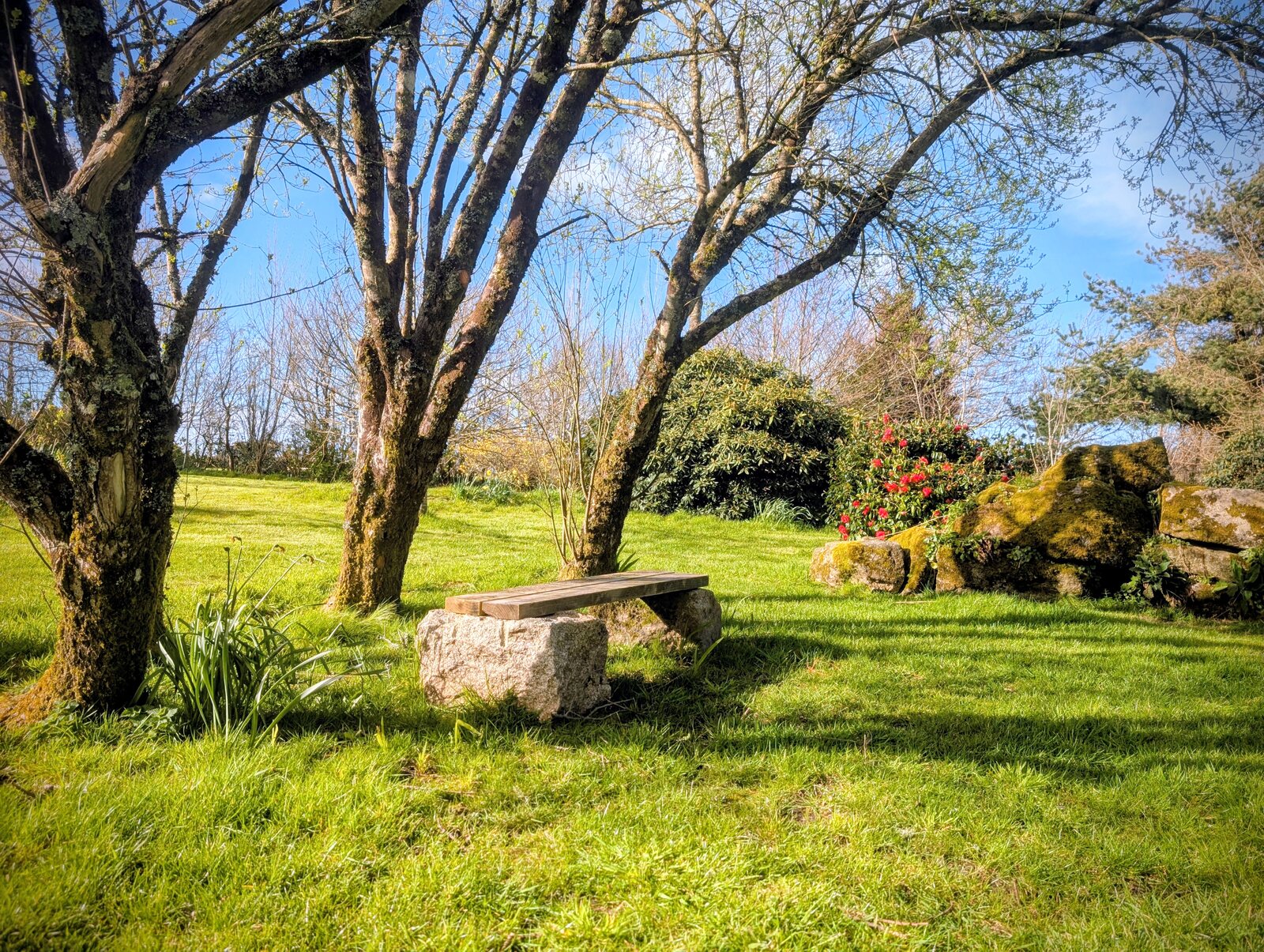
For visitors, the granite is the most distinctive material in the parish. Whitewashed cottages with granite quoins, granite-mullioned windows, the long granite-faced hedgerow walls that line many of the lanes. It is the visible thread that ties the parish to itself.
The walking landscape: Cornish hedges and views over Falmouth Bay
What the parish is most beautiful for is walking. Mabe has a dense network of public footpaths and quiet lanes, almost entirely off the road system, that lets you walk for hours without needing a car. The defining features:
- Cornish hedges: the granite-and-earth field boundaries that are essentially linear nature reserves. Some date from the Bronze Age. Spring fills them with primroses, bluebells, campion and red valerian; summer with foxgloves, honeysuckle, brambles in flower; autumn with the slow-fade of blackthorn and hawthorn. They are why the parish is so quietly biodiverse.
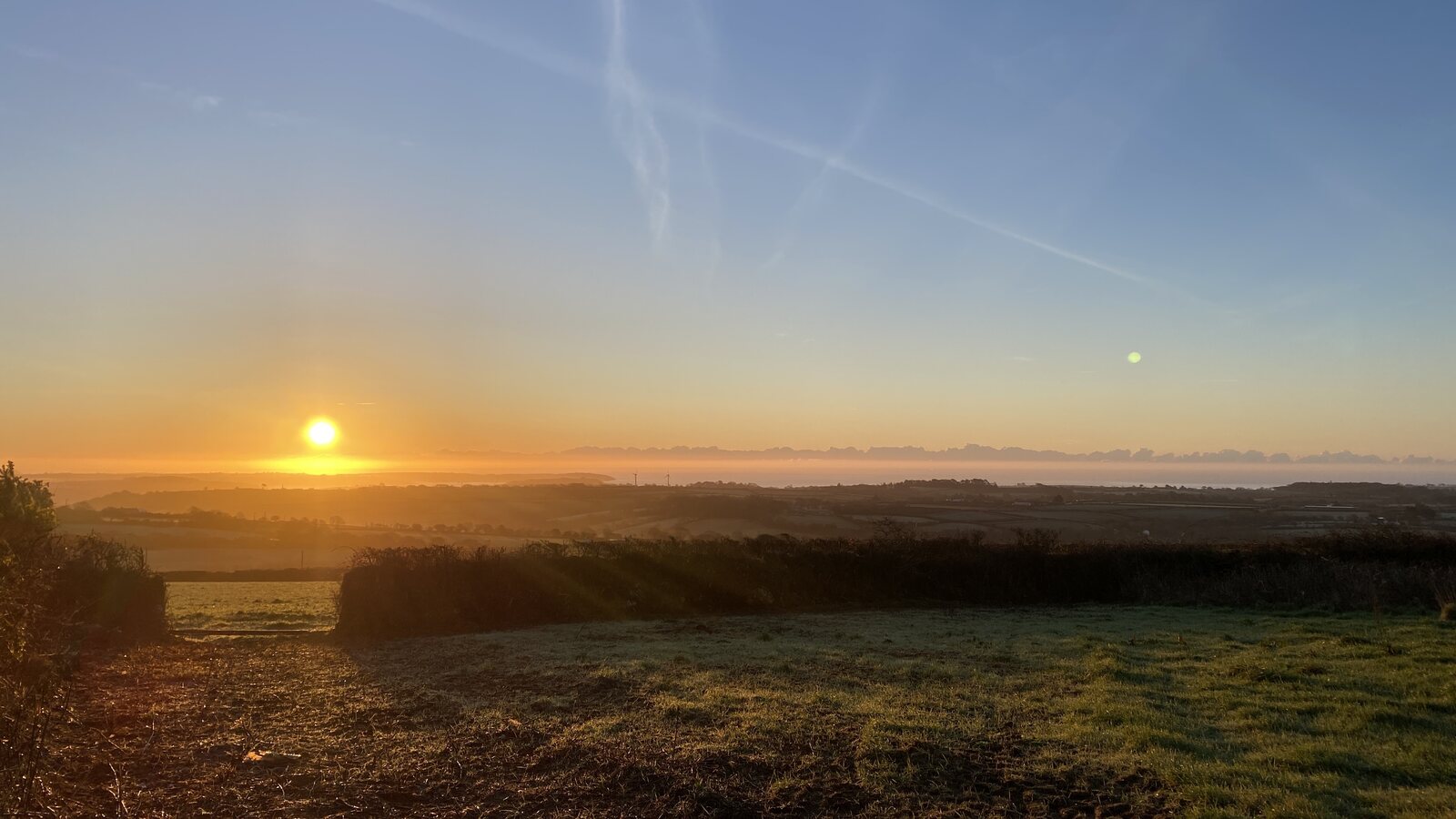
- Views over Falmouth Bay: on a clear morning from the high ground above Mabe Burnthouse you can see the whole sweep of Falmouth Bay, from Pendennis Head across to the Lizard, with the sea opening south. The sunrise shots from up here are some of the strongest in our cottage albums.
- Mature trees: oak, sycamore, beech, holly. Less wind-stunted than the coast; more sheltered.
For the dedicated walks see our walks near Falmouth and Penryn guide. Most of those routes start from Mabe.
Argal Reservoir
The headline walking destination in the parish is Argal Reservoir: a small reservoir half a mile from the cottages, with a 2-mile circular footpath around it. Mostly flat, mostly woodland, mostly empty. Bluebells through the lakeside wood in spring, autumn colour in October, waterfowl and herons year-round. The South West Lakes Trust runs the site and the kiosk; the walking is free. The gentle, default Trewena walk that we send guests on most mornings.
The reservoir was built in the 1940s to supply water to Falmouth. It is an unfussy bit of mid-twentieth-century engineering, but the wooded valley around it is genuinely beautiful and the wildlife has thoroughly reclaimed it.
St Laudus Church
On the hill above Argal Reservoir sits St Laudus Church, the parish church of Mabe. The building is medieval in origin, dedicated to St Laudus (also called St Lo), an early-medieval Breton and Norman saint (sixth-century, bishop of Coutances). One of only a handful of churches in England dedicated to him, most St Laudus dedications being in Brittany and Normandy.
Mabe was historically known by the Latinised name De Sancto Laudo ("of St Laudus"), eventually shortened to Mabe. The church's hilltop position gives panoramic views down the valley to Argal Reservoir and across to Falmouth Bay beyond. The churchyard contains the granite headstones of the quarrymen and farmers who worked this parish through the centuries; it is a powerful place to stand on a clear evening.
A short detour off the Argal Lake walk takes you up the hill to the church and back. Strongly worth the climb on a clear day.
The pubs
Two pubs serve the parish:
- The New Inn in Mabe Burnthouse: the village pub. A proper Cornish community pub in the centre of the village, with a hearty food menu, regular community events (barbecues, sales, seed swaps) and a friendly local-meets-walker crowd. An easy walk from the cottages.
- Halfway House at Rame Cross: on the A394 a few miles up the Falmouth-to-Helston road, technically on the western edge of the parish. A food-led pub with a strong carvery reputation, generous portions, family- and dog-friendly. A good stop on the way back from the Lizard.
For the wider Falmouth and Penryn restaurant picture, the parish sits within easy reach of all the harbour-front options.
Verdant Brewery, fifteen minutes down the hill
The local brewery, and Cornwall's most internationally acclaimed modern brewery, sits just over the parish boundary, on the northern edge of Penryn parish next to the University of Exeter's Penryn Campus. Verdant Brewery and Taproom is closer to the Trewena cottages than Penryn town centre is. Hazy IPAs straight from the brewery floor, fresh pizzas from the on-site pizza oven, dogs welcome.
Walk down through the Mabe lanes to the taproom for a long Saturday afternoon; walk back up the hill afterwards. Fifteen minutes on foot in each direction, all through quiet lanes.
Things to do in Mabe parish
Three substantial attractions sit inside the parish boundaries:
- Via Ferrata Cornwall: the only via ferrata in Cornwall, threaded across the rock faces of a disused granite quarry just outside Mabe Burnthouse. Climbing for non-climbers: bolted iron rungs and cables let you traverse cliffs that would otherwise need ropes and gear. Strongly memorable. Book ahead.
- Kernow Adventure Park in the parish lanes: outdoor adventure play, ropes courses, axe throwing, archery. Good for older kids and adults who want a half-day adrenaline session.
- The Flicka Foundation Donkey Sanctuary at Halvosso: a free-entry rescue donkey sanctuary in the parish lanes. Over a hundred donkeys in residence; a cafe on site does decent coffee and lunch. Quietly one of the best free family days out in the wider Falmouth area.
Three substantial visitor-attractions within a couple of miles of each other, all in the parish. Most parishes this size do not have one.
Why Mabe is the right base
Most visitors stay in central Falmouth, central Penryn, or down on the south coast. Mabe is the underrated alternative. Far enough from the towns to be properly quiet, close enough to be in central Falmouth in ten minutes by car or the riverside walk-and-ferry. The parish has the walking, the pubs, the brewery, the attractions, the granite history, the medieval church, the reservoir. It is not a dormitory village, and not the middle of nowhere either: it is a distinct working parish with its own character on Falmouth's western edge.
For couples in particular, the combination of country quiet plus easy Falmouth access plus a dense doorstep network of walks is a strong shape. See our Cornwall for couples guide for the longer base-here argument and our long weekend in Cornwall for couples for the practical day-by-day version.
For the cottages themselves: Trewena sits on three acres in the parish, with three one-bedroom self-catering cottages, fifteen minutes' walk to Verdant taproom, twenty minutes to Argal Reservoir, and a fifteen-minute drive to Falmouth's harbour-front restaurants.
Practical: when to come, how to get around
- By car: easy. Mabe Burnthouse is a few minutes off the A39 (Falmouth-Truro) and the A394 (Falmouth-Helston). Parking is generally available in the village.
- By train: Falmouth Town and Falmouth Docks rail stations are around fifteen minutes by car or bus from Mabe. Penryn station is closer.
- By foot: the parish footpath network is well-maintained and signposted. OS Explorer 103 (The Lizard) covers the area; the OS Maps app is the easiest digital alternative.
- Best time of year: the parish is at its best in late April to early June (bluebells, hedge flowers, long evenings) and September to October (autumn colour in the hedges, low autumn sun on the granite). Winter is quiet and atmospheric; summer is the busiest with school-holiday families at the attractions.
For the year-round weather picture see our Cornwall and Falmouth weather guide. For the seasonal angle see spring in Cornwall (the bluebell-and-microclimate piece).
More for the parish and the area
- Argal Lake walk: the 2-mile reservoir circular, the parish's headline walk
- Walks near Falmouth and Penryn: the wider footpath network from the parish
- Verdant Brewery and Taproom in Penryn: the local brewery, walkable from the parish
- Via Ferrata Cornwall: the disused-quarry climbing attraction
- The Flicka Foundation Donkey Sanctuary: the rescue donkey sanctuary in the parish lanes
- Best restaurants in Falmouth and Penryn: the wider food picture
- Cornwall for couples: the slow Falmouth-area weekend, anchored in Mabe
- A long weekend in Cornwall for couples: the day-by-day itinerary version
- The Falmouth walking tour: the four-mile town walking itinerary down the hill in central Falmouth
- Spring in Cornwall: the bluebell-and-microclimate piece for the season the parish does best
Tags
Stay in touch
Occasional Cornwall updates from Rich at Trewena. Around four times a year, never more.
Planning a trip to Cornwall?
Three one-bedroom cottages on a smallholding on the edge of Falmouth. A genuine Cornish base for couples and singles.