Where to See Seals in Cornwall, Whatever the Season

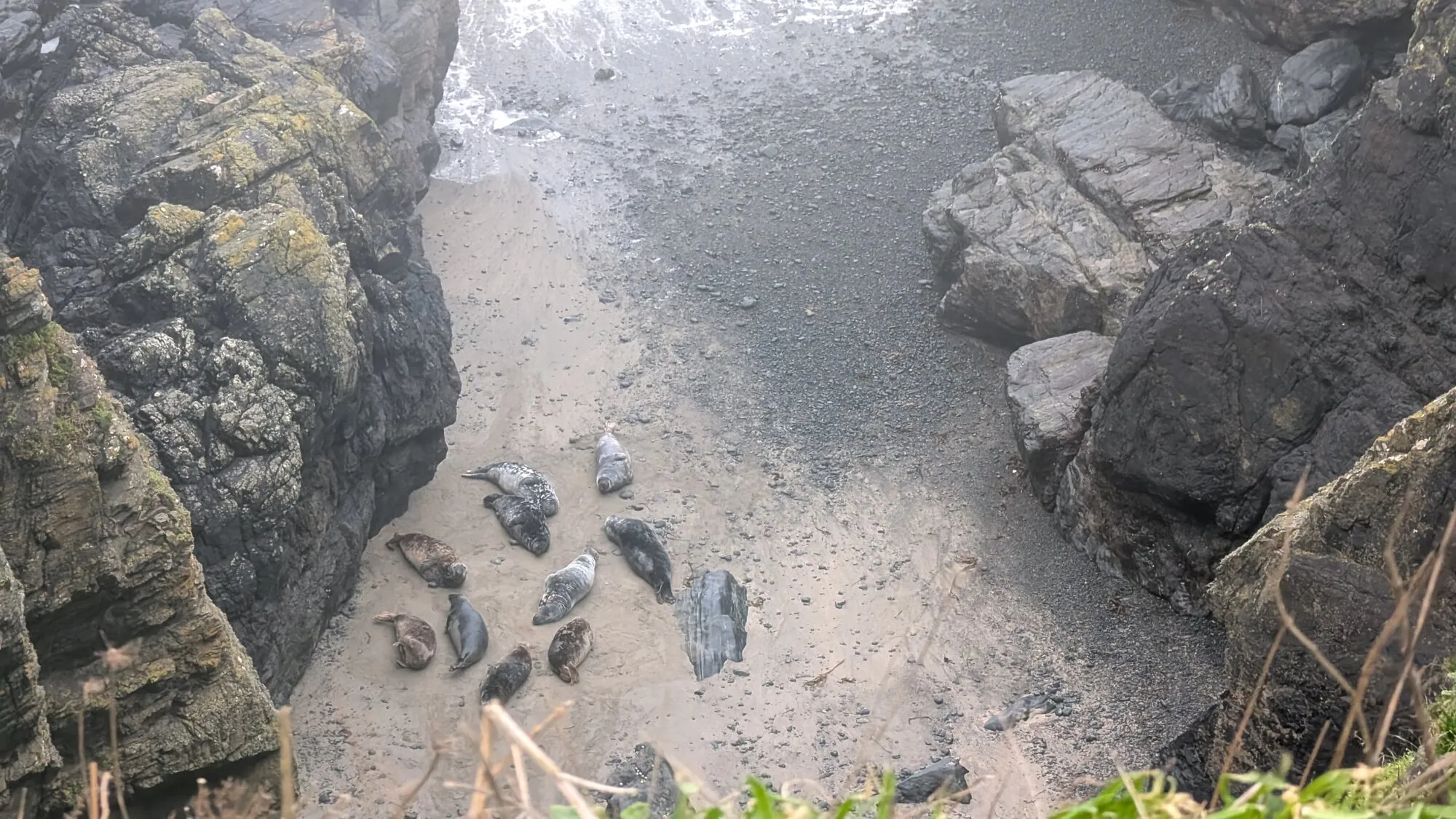
Cornwall is one of the best places in Britain to watch grey seals, and you don't need a boat to do it. From a clifftop at Godrevy to the rocks around Lizard Point and a rescue centre on the Helford, there is somewhere to see them in every season. This guide covers where to go, what the seals are doing through the year, and how to watch without disturbing them.
Why Cornwall is so good for seals
Cornwall's coast is almost made for grey seals. Hundreds of miles of rocky shoreline, sea caves and small coves that are hard to reach from land give them safe places to rest, give birth and moult. The seas around the county are rich in the fish they feed on, and offshore reefs and islands give them somewhere to haul out at high tide.
The grey seal is the one you will see: large, with a long, straight "Roman" nose. They spend around four days at sea for every day on land, which is why the few beaches they favour matter so much.
What seals are doing through the year
Autumn (September to December): pupping. Most Cornish pups are born between September and November, often in sea caves and on inaccessible beaches. For the first two or three weeks, pups stay ashore while their mothers feed them on milk that is around 60% fat, and they grow from about 10kg to over 40kg. A white, fluffy pup alone on a beach is usually not abandoned: its mother is likely feeding just offshore. Keep well away.
Winter and spring (December to April): the moult. After breeding, seals haul out to moult their old coats, and this is when you see the largest groups ashore. It is the best time of year for numbers, and a cold, clear winter morning at Godrevy watching a beach full of seals is hard to beat.
Summer (May to August): at sea. Seals spend more time feeding and resting on offshore rocks and islands. You will often see a head bobbing in the water from the coast path, and being out on the water, on a boat trip, a kayak or a paddleboard, is the most reliable way to see them.
The best places to see seals
1. Mutton Cove, Godrevy
The most dependable place in Cornwall to watch seals from land. Grey seals haul out on the beach below the cliffs at Godrevy, near Hayle, and you look down on them from the clifftop path, well out of their way. Best around low tide, and busiest from autumn through to spring. Our full guide: Mutton Cove.
- From Trewena: about 45 minutes.
2. Lizard Point
You almost always see seals around Lizard Point, on the rocks below the cliffs and in the water, whether you are hiking the coast path or out on a paddleboard. Combine it with a walk and lunch at Britain's most southerly point. Our guides: hiking the Lizard and the Lizard road trip.
- From Trewena: about 35 minutes.
3. The Cornish Seal Sanctuary, Gweek
At the head of the Helford, and the closest seal experience to Trewena. The sanctuary rescues and rehabilitates injured and orphaned pups, particularly after autumn storms, and releases them back to the sea. You see resident seals up close and learn how the rescue work happens. Our guide: the Cornish Seal Sanctuary.
- From Trewena: about 15 minutes.
4. On the Helford, by kayak or paddleboard
We have seen seals on the Helford from a kayak and a paddleboard. Out on the water you are on their level, and a curious head popping up beside you is one of the best wildlife moments in Cornwall. Go with a guide if you are new to it, and keep your distance if you do meet one. See the best places to paddleboard in Cornwall.
5. Boat trips from St Ives
Trips out to Seal Island from St Ives harbour are the classic way to see seals basking on the rocks, with a chance of dolphins or porpoises on the way. Best from spring to autumn, weather permitting. See St Ives in a day.
6. West Penwith: Land's End to Pendeen
The rugged far west, from Porthgwarra and Gwennap Head round to Cape Cornwall and Pendeen, is seal country. Scan the water below the cliffs on any coast path walk. See Sennen Cove and Land's End.
How to watch seals without disturbing them
Seals disturbed on land often stampede into the sea, which injures them and can separate mothers and pups. Watch from a distance, above them if you can, and let them stay relaxed.
- If a seal is looking at you, you are too close. Back off quietly.
- Stay out of sight and keep noise down, particularly on clifftops above hauled-out groups.
- Never approach or touch a pup. Its mother is usually nearby.
- Keep dogs on a lead near seal beaches.
- On the water, keep your distance in kayaks and paddleboards and never paddle between seals and the shore.
- If a seal looks injured or unwell, do not intervene. Report it to British Divers Marine Life Rescue.
Seal-watching from Trewena
Trewena sits in the middle of it: the Seal Sanctuary is fifteen minutes away on the Helford, Lizard Point is a short drive south, and Godrevy is an easy morning's drive to the north coast. Come back to a quiet cottage with a pair of binoculars on the windowsill: there is one in every cottage.
Plan your trip
Tags
Stay in touch
Occasional Cornwall updates from Rich at Trewena. Around four times a year, never more.
Planning a trip to Cornwall?
Three one-bedroom cottages on a smallholding on the edge of Falmouth. A genuine Cornish base for couples and singles.