Mutton Cove: When and Where to See Cornwall's Atlantic Grey Seal Colony

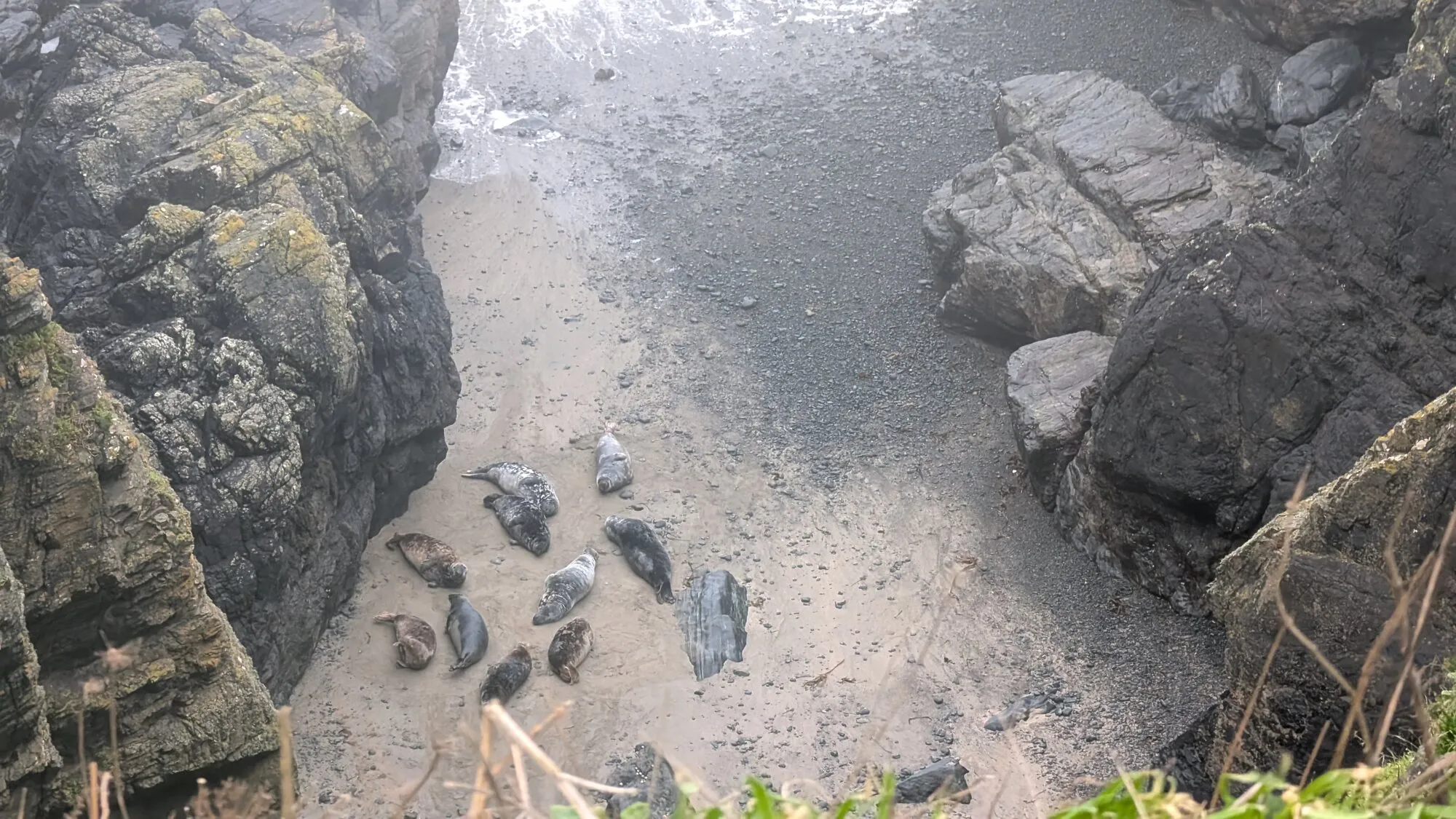
Mutton Cove is a small sand and shingle beach beneath the cliffs of Godrevy Head on Cornwall's north coast. It is known for one thing: a regular colony of Atlantic grey seals that haul out on the sand and rest there for hours at a time. Sometimes a handful, sometimes well over a hundred. From the clifftop fifty metres above, you can watch them as long as you want without disturbing them.
This is one of the most reliable wild seal-viewing spots in southern Britain. Here is the practical guide: where it is, when to come, where to park, and how to watch without doing harm. Plus how a Mutton Cove morning fits a couples' break in Cornwall from a Trewena base on the south coast.
Where Mutton Cove actually is
The cove sits beneath the cliffs of Godrevy Head, on the north coast around 30 minutes' drive from St Ives and 50 minutes from Falmouth. The headland is owned and managed by the National Trust, with a paid car park at the base of the point and a footpath network across the top.
The cove itself is not accessible. The cliff is steep, unstable and the only path down would take you through what is effectively a wildlife reserve. The viewing is done from the clifftop above, where the path runs along the cliff edge with clear sight lines down to the beach. Around eight minutes' walk from the car park brings you to the position most photographers and watchers use, looking down onto the sand.
Offshore, the famous Godrevy Lighthouse sits on its small rock, the one Virginia Woolf based To the Lighthouse on. It is the second postcard view of the day, after the seals.
The seals: Atlantic greys
The seals at Mutton Cove are Atlantic grey seals (Halichoerus grypus), one of the UK's two native seal species. They are the larger of the two. An adult bull reaches 200 to 300 kg, has a long Roman-nose profile, and is unmistakably different from the smaller, rounder-faced common (harbour) seal. Cornwall holds one of the most important populations on the south coast of England, and Mutton Cove is one of two main Cornish sites for haul-out monitoring (the other being the south-coast colony in Falmouth Bay).
The Cornwall Seal Group Research Trust monitors the colony and identifies individual seals by their coat patterns. Many of the seals at Mutton Cove are returning residents, recognised by name in the research records over multiple seasons.
When to see them: by season
Seals are present at Mutton Cove year-round, but the numbers and the photogenic appeal shift with the season.
- October to November: pupping. Mothers come ashore to give birth and nurse pups. The white-coated pups are visible from the cliff above. This is the most photographed window of the year and also the one where disturbance does the most damage; a separated pup may not survive. Keep absolutely quiet. No dogs off lead, no drones, no descent to the beach.
- December to February: peak haul-out. The biggest numbers of the year. At low tide on a calm winter day you will often see 100 to 150 seals on the sand. This is the easiest season to come if you want the iconic shot of a packed cove.
- March to May: moulting. Seals come ashore to shed last year's coat and grow a new one. Smaller numbers than the winter peak but still usually 30 to 60 animals.
- June to September: smaller groups. Five to 30 seals is more typical. Always worth a visit, but not the headline season.
When to see them: by tide
The single most important variable on any given day is the tide.
At low tide the beach is exposed and the seals come ashore to rest. At high tide the beach disappears and the seals are in the water (you may still see heads bobbing offshore, but the iconic haul-out shot is impossible).
Check tide times for Hayle before you set off; the cove follows the same tidal cycle. Aim to arrive an hour either side of low water for the longest viewing window.
How to get there and where to park
Drive to the National Trust Godrevy car park (postcode TR27 5ED). From the south, A30 to the Hayle exit, then signposted Gwithian and Godrevy. Around 50 minutes from Falmouth, 25 from Newquay, 30 from St Ives. The car park is free for NT members and pay-and-display otherwise. Open year-round.
The Godrevy Beach Cafe at the back of the beach is a good lunch stop and the natural anchor for a half-day visit.
The walk to the viewing point
From the car park, take the marked footpath up onto the headland. Around five minutes brings you to the first wide cliff view. Another three minutes takes you along the cliff edge to the position above Mutton Cove, where the path swings inland slightly and a flatter area gives you a stable place to stand or sit and watch.
The seals are around 50 metres below. Binoculars make the visit. With the naked eye you will see seal-shaped grey-and-brown forms on the sand. With binoculars you will see them yawning, scratching, rolling over, fighting playfully, sleeping with a flipper over their face. Many people end up staying an hour or more once they settle in.
How to watch responsibly
The seals at Mutton Cove are completely wild. They use the cove because no one disturbs them there. Keeping it that way is the bargain.
- Stay on the public footpath. Do not attempt to descend to the beach by any route. Any approach from the sand scatters the colony, and the cliff is unstable.
- Use binoculars, not your zoom feet. The view from the cliff is the view. Trying to get closer is what does the harm.
- No drones. A drone above the cove will scatter the entire haul-out within seconds. In pupping season this can separate mothers from pups, sometimes fatally. The National Trust posts signs to this effect; please respect them.
- Quiet voices. Sound carries down the cliff face. Loud conversation on the path is enough to make seals lift their heads and shift.
- Dogs on a short lead. Off-lead dogs at the cliff edge are the single most common cause of disturbance.
Pupping season (October to November) is when the rules matter most. Outside that window the colony is more tolerant, but the principle is the same.
What else is at Godrevy
The seal-watching itself takes an hour or so at a relaxed pace. Plenty more around to make a half-day or full day.
- Godrevy Lighthouse view. The offshore lighthouse on its small islet, half a mile out. Best photographed from the south end of the headland near the car park, with the Atlantic and the lighthouse silhouetted at golden hour.
- Godrevy Beach. The wide sandy bay south of the car park. A surfers' beach in summer, big enough to swallow a crowd. The Godrevy Beach Cafe at the back is the lunch stop.
- The Knavocks. The rockier headland section north of Godrevy, with more dramatic cliffs and quieter footpaths. A 30-minute round walk from the car park.
- Hayle Towans. The three-mile dune-backed beach south from Godrevy round towards Hayle, walkable at low tide. The longer-walk version of a Godrevy day.
A standard shape for a Godrevy half-day: park, walk up to the seal viewpoint, watch for an hour, walk back down via the lighthouse view, lunch at the cafe, beach time at Godrevy beach itself, drive home mid-afternoon.
How a Mutton Cove day fits a couples' break at Trewena
The north coast around Godrevy is around 50 minutes' drive from a Trewena base on the south coast, which puts it in clean half-day or full-day excursion range.
The angle that makes Mutton Cove particularly good for a Trewena stay is the winter overlap. The seal numbers peak from October to February. Trewena's shoulder-season and winter pricing is at its kindest in the same window. A couples' break in November or January, with the wood burner lit at Little Avalon in the evenings and the seal cove busy with hundred-plus seals in the days, is one of the strongest off-peak Cornish weekends going.
For couples on a longer break, pair the Mutton Cove day with one south-coast counterpart on a different day: the Lizard cliffs, the Helford gardens, or simply the walking the south coast path near Falmouth on your doorstep.
Plan your visit
- Cottages for couples near Falmouth: the audience overview, how a Trewena stay works as the base
- Cornwall for couples: the slow-Falmouth-weekend shape
- Best nature and wildlife spots in Cornwall: for the wider seasonal wildlife year
- Best South West Coast Path walks in Cornwall: for the longer walking-shape day trips
- Reasons to visit Cornwall in winter: for the off-season seal overlap context
- Cornwall in autumn for couples: the autumn seasonal piece
- Polly Joke poppies: for the summer counterpart to Mutton Cove's winter peak
- Best beaches near Falmouth: the home-base south-coast beach shortlist
For the brand and booking side, see our three cottages on the rural edge of Falmouth, or drop us a message about availability around the seal-watching season.
Tags
Stay in touch
Occasional Cornwall updates from Rich at Trewena. Around four times a year, never more.
Planning a trip to Cornwall?
Three one-bedroom cottages on a smallholding on the edge of Falmouth. A genuine Cornish base for couples and singles.