Cornwall in Literature: The Writers Inspired by the Cornish Coast

Few places have fired the literary imagination like Cornwall. A wild coast, hidden creeks, smugglers' inns and a brooding moor: it is a landscape that seems to want a story told about it, and for two centuries writers have obliged. From the great house of Rebecca to the mines of Poldark, much of it is set in real places you can still walk into today. Here is a tour of Cornwall's literary landscape, from the county we are lucky enough to call home.
Daphne du Maurier, Cornwall's own
No writer is more bound up with Cornwall than Daphne du Maurier. She fell for the county as a young woman and spent much of her life around Fowey on the south coast, first at Ferryside in Bodinnick and later at Menabilly, the secluded, sea-facing house she loved above all others.
Menabilly became Manderley, the great, haunted house of Rebecca (1938), her most famous novel. Jamaica Inn (1936) took its name and its atmosphere from the real coaching inn out on Bodmin Moor, a tale of smugglers and wreckers born from that bleak, beautiful landscape. Frenchman's Creek (1941) is set on a real tidal creek off the Helford river, a short drive from our cottages, and remains one of the most romantic spots on the whole south coast.
Fowey still celebrates her every year with the Daphne du Maurier Festival. To read her is to be handed a map of Cornwall's moods.
Winston Graham and Poldark
If du Maurier gave Cornwall its gothic side, Winston Graham gave it its epic. His twelve Poldark novels, begun in the 1940s and set in the late 18th and early 19th centuries, follow the mining families, the crumbling engine houses and the storm-lashed coast of a fictional corner of Cornwall near Truro. Graham lived at Perranporth and knew this coast intimately, and the books are steeped in the real history of Cornish tin and copper. The later television adaptations sent a new wave of visitors to the clifftops; more on those in our companion piece on Cornwall on screen.
St Ives and the lighthouse
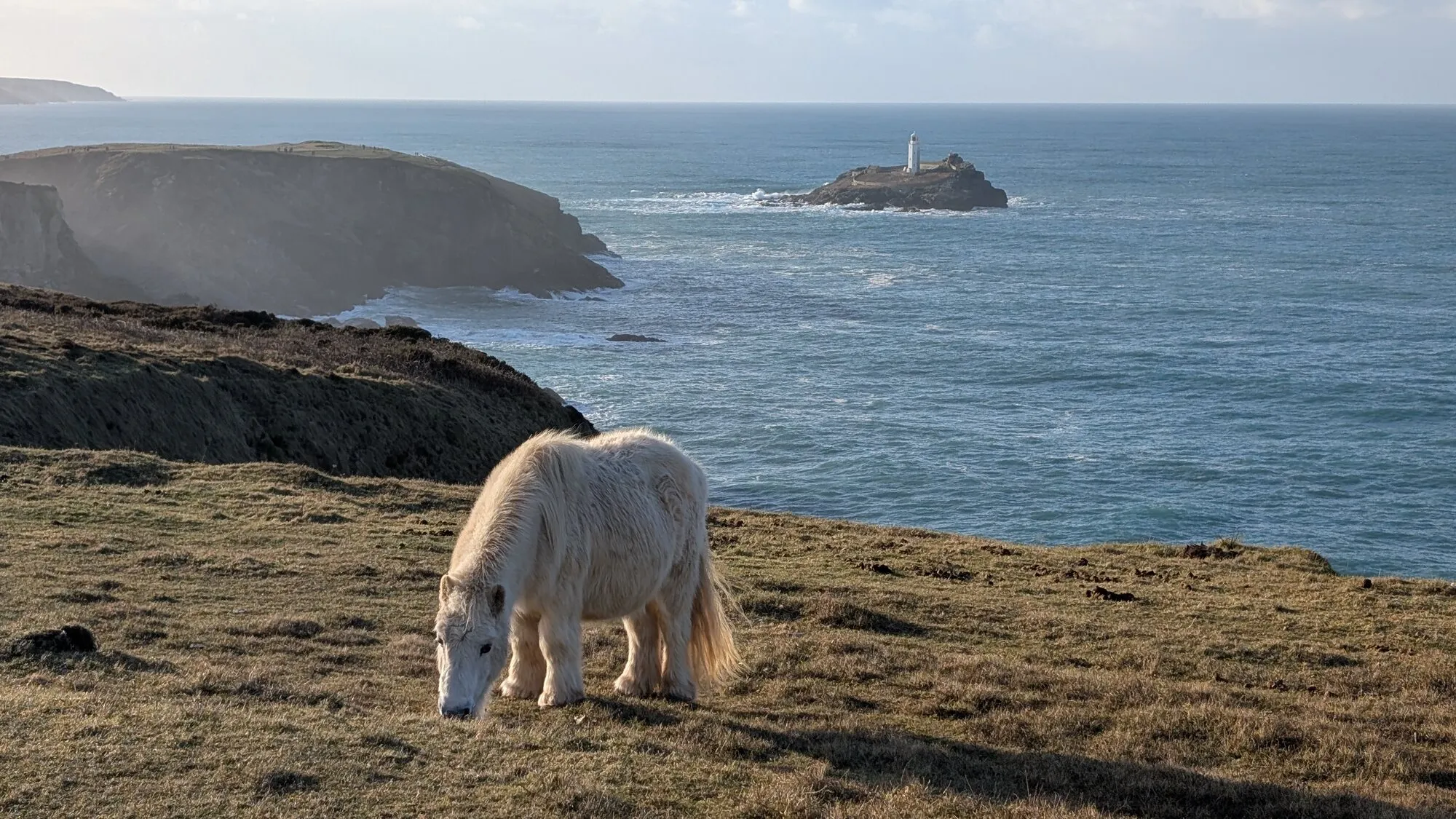
Over on the north coast, St Ives shaped one of the century's great novels almost by accident. Virginia Woolf spent childhood summers at Talland House, gazing across the bay to Godrevy Lighthouse. Years later that lighthouse, that house and that seaside light became To the Lighthouse (1927), even though she moved the setting to the Hebrides. The Cornwall of her childhood runs right through it.
St Ives went on to become one of Britain's great artists' towns, home to Barbara Hepworth and the modern painters, its extraordinary light drawing creative people to this day.
The north coast and the poets
The wilder north coast has its own literary roll-call. Thomas Hardy came to St Juliot, near Boscastle, as a young architect in 1870, fell in love with Emma Gifford, and later set his novel A Pair of Blue Eyes on these very cliffs, the stretch you can walk on our Tintagel to Boscastle coast path. Sir John Betjeman loved north Cornwall above anywhere, holidayed for a lifetime around Trebetherick and Daymer Bay, wrote some of his best-loved poems about its cliffs, and is buried at the little church of St Enodoc in the dunes. And Launceston gave Cornwall one of its finest modern poets in Charles Causley.
More writers who found Cornwall
The list goes on:
- Rosamunde Pilcher, born at Lelant near St Ives, set much of The Shell Seekers and other novels in Cornwall, and is so beloved in Germany that Cornwall sees coachloads of "Pilcher tourists" every year.
- D.H. Lawrence lived at Zennor on the wild north coast during the First World War, writing part of Women in Love, before being turned out under absurd suspicion of spying.
- Sir Arthur Quiller-Couch, the writer and critic known as "Q", made his home at Fowey and set stories in its thinly disguised "Troy Town", and his friend Kenneth Grahame knew the Fowey estuary well in the years around The Wind in the Willows and its messing about in boats.
- John le Carre spent some forty years living near Land's End, writing many of his novels looking out at the Atlantic.
Visit the literary landscape
The best of it is that so much of this is still here to see. You can have lunch at Jamaica Inn, walk the cliffs Hardy fell in love with, take the ferry across to du Maurier's Fowey, or stand at St Ives and look out at Woolf's lighthouse. From a central base like ours, all of it is within a day trip, which is rather the point of staying somewhere well placed.
Plan your visit
- Cornwall on film and TV: the companion piece, from Poldark to Doc Martin
- Tintagel to Boscastle coast walk: the cliffs that gave Thomas Hardy a novel
- Surprising facts about Cornwall: including the Cornish mother of the Bronte sisters
- Unusual and funny Cornish place names: the county's odd names decoded
- The best base to explore Cornwall: why a central spot near Falmouth reaches it all
Come and read Cornwall where it was written. Our three cottages sit on the edge of Falmouth, within a day of du Maurier's Fowey, the Helford creeks and Bodmin Moor, or drop us a message about a stay.
Tags
Stay in touch
Occasional Cornwall updates from Rich at Trewena. Around four times a year, never more.
Planning a trip to Cornwall?
Three one-bedroom cottages on a smallholding on the edge of Falmouth. A genuine Cornish base for couples and singles.