Visiting the Eden Project: A Complete Guide

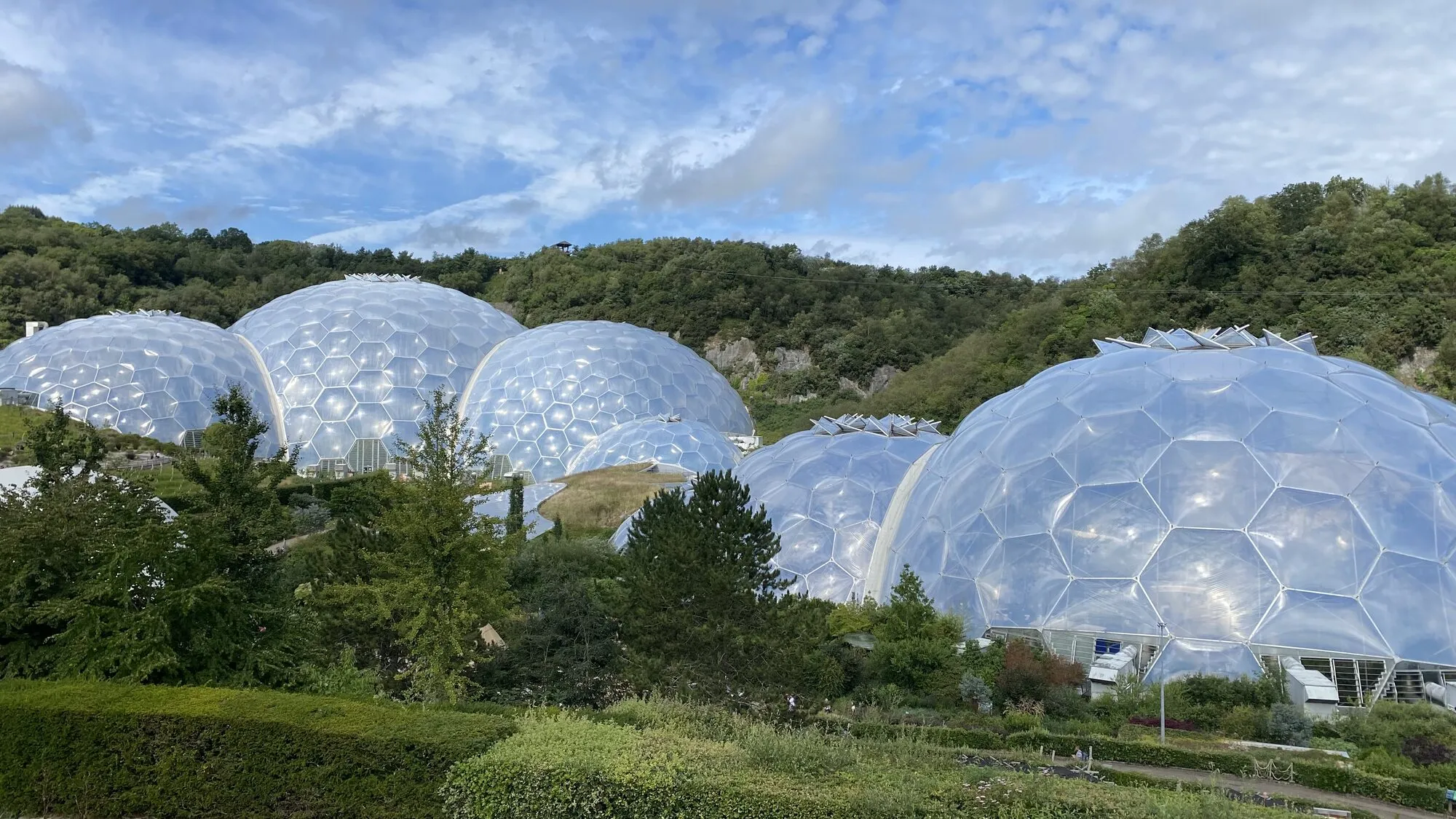
The Eden Project is one of the most ambitious garden and conservation projects ever built, a string of giant transparent Biomes housing the world's largest indoor rainforest, set inside a reclaimed china clay pit near St Austell in mid-Cornwall. It opened in March 2001, designed by Nicholas Grimshaw and founded by Tim Smit, and has grown into one of the UK's most-visited paid attractions. From Falmouth and Trewena it is around an hour's drive, and an easy day out built around a single iconic destination.
Whether you come for the rainforest, the outdoor gardens, the SkyWire zip line, the Eden Sessions concerts or the winter ice rink, this is a guide to making the most of a day at Eden.
Where it is and how to get there
The Eden Project sits at Bodelva, two miles outside St Austell. From the A30 it is signposted at the St Austell turn-off, and from Falmouth the easy route is the A39 north then the A390 east via Truro and St Austell, around an hour door to door. There is a large on-site car park, free for visitors with a paid ticket.
If you are travelling without a car, the Eden Project is connected to Newquay, St Austell, Truro and Bodmin Parkway by First Kernow buses, and Eden offers a discount on tickets bought alongside a bus, train or bicycle arrival.
The Biomes
The two Biomes are the headline attractions and what most visitors come to see. They are the world's largest greenhouses by volume, and they sit on the floor of a former kaolin pit big enough to hold the Tower of London with room to spare.
The Rainforest Biome
The Rainforest Biome is the bigger of the two, a 50-metre-high transparent dome containing more than a thousand species of tropical plants. The path winds upward through different rainforest regions, from the canopies of South-East Asia and West Africa to the riverside ecosystems of the Amazon Basin, climbing past waterfalls and a suspended rainforest canopy walkway that lets you look down into the trees. The temperature inside sits around 21C and pushes well into the 30s on a sunny summer afternoon, with humidity to match. Plan for water and a thin layer that you can shed.
The Mediterranean Biome
The Mediterranean Biome is smaller and altogether more relaxing. Olive groves, citrus, vines, lavender, fragrant herbs and an annual tulip display fill terraces modelled on the gardens of southern Europe, with parallel sections devoted to the climate-comparable landscapes of South Africa and California. Photographers tend to spend longer in here than they expect.
The outdoor gardens
The 30 acres of outdoor gardens are easy to overlook on a first visit but well worth an unhurried hour of their own. Designed to celebrate Cornwall's temperate climate and to mirror habitats from around the world, the gardens stretch from the upper visitor centre down to the Biomes through a series of named zones.
Highlights include the Spiral Garden, which winds around a central plant story; the Wild Cornwall area, kept deliberately rough and home to a busy population of pollinators and small mammals; and the seasonal flower meadows that follow the slope down towards the Biomes in spring and summer.
Adventure: the SkyWire, giant swing and more
For older children and adults with a head for height, Hangloose Adventure runs a cluster of attractions on the upper rim of the pit:
- The SkyWire is one of England's longest zip lines, a 660-metre flight that takes you across the Biomes from the upper terrace to the far side of the site, hitting around 60mph on a clear day.
- The Giant Swing drops you 50 metres into the pit on a pendulum arc, the closest thing to free-fall on the site.
- The Drop Slide is a tamer alternative for younger thrill-seekers, a near-vertical slide off the upper terrace.
- The Hangloose Big Air is an inflatable jump pad for the under-12s.
Hangloose tickets are bought separately from Eden entry. Pre-booking is sensible at hangloose.co.uk, especially in summer.
The Core and the educational mission
The Core, Eden's striking timber-and-copper education building, sits on the upper rim and is well worth the climb. Inside, hands-on exhibits explore the relationship between people, plants and the planet, and the building itself is designed using mathematical patterns drawn from sunflower seeds. Workshops, talks and family activities run on most days through school holidays.
The Eden Project's mission is educational charity rather than commercial entertainment. Profits are reinvested into the gardens, the global conservation programme, and outreach work with schools and communities both in Cornwall and overseas.
The Eden Sessions and events year
The Eden Sessions has been turning the natural amphitheatre between the Biomes into one of the UK's most distinctive concert venues every summer since 2002. Past line-ups read like a festival headliner roster: Bjork, Elton John, Foo Fighters, Lionel Richie, Mumford and Sons, Pulp, Lily Allen, Brian Wilson and many more. Shows run from June to early August. Tickets and the current line-up are at edensessions.com.
In winter, the Eden Project Ice Rink sets up beside the Biomes from late October through early January, paired with a festive programme of light installations, choirs and Christmas events inside the heated Biomes.
Year-round, the calendar includes seasonal flower festivals, food and drink weekends, the late-summer Festival of Discovery and the May half-term family programme. Check edenproject.com before booking to see what is on during your dates.
Sustainability and the china clay pit story
Eden's setting tells half the story before you walk through the gate. The Biomes sit on the floor of the Bodelva pit, a former china clay (kaolin) quarry that had been worked for over 160 years and was a sterile, lifeless landscape when Tim Smit acquired the site in the late 1990s. The reclamation of the pit, the engineering of the Biomes and the building of the gardens from a literal blank slate is one of the great stories in modern British landscape design.
The Biome shells are made of ETFE foil cushions, a strong, lightweight fluoropolymer that lets through more light than glass and weighs only a fraction as much. Steel use was minimised by exploiting the geodesic dome geometry, and the whole structure has a smaller carbon footprint than a comparable glass greenhouse would.
A deep geothermal plant on site, drilled to 5km below the surface, came online to provide renewable heat to the Biomes and hot water to the wider campus, making Eden one of the first major UK attractions running on its own geothermal heat. The plant continues to scale up to supply more of Eden's energy needs.
Visiting with children
The Eden Project is one of Cornwall's most child-friendly day-out attractions. The Rainforest Biome is an immersive sensory experience that holds the attention of even small children, with leaf-cutter ants, butterflies and a treetop canopy walk to look out for. The outdoor gardens have play structures, family trails and plenty of grass to run on. Hangloose Adventure suits older children and teenagers (the SkyWire has a minimum age and weight). The Core building has hands-on, age-appropriate educational exhibits, and the food halls cover everything from full meals to ice creams. The whole site is buggy-friendly and has changing facilities.
Beyond Eden
If a day at Eden has put you in the mood for more Cornish gardens and big landscapes, our guides to Glendurgan Garden, the Penrose Estate walk near Helston and the best nature and wildlife spots in Cornwall cover natural complements within easy reach. For a quieter, less commercial garden experience, the Lost Gardens of Heligan are 25 minutes the other side of St Austell and pair naturally with an Eden visit on a two-day garden trip. Tickets and information for Eden itself are at edenproject.com.
Tags
Stay in touch
Occasional Cornwall updates from Rich at Trewena. Around four times a year, never more.
Planning a trip to Cornwall?
Three one-bedroom cottages on a smallholding on the edge of Falmouth. A genuine Cornish base for couples and singles.