The 6 Best Places in Cornwall to Watch Storms

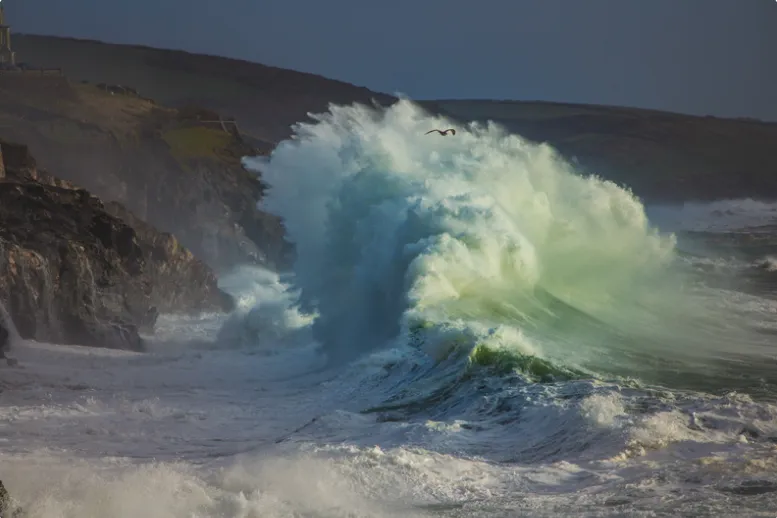
Cornwall in winter is dramatic. Beaches and bays that are clear and tranquil in summer transform into moving scenes of power and motion. With 400 miles of coastline and the Atlantic on three sides, Cornwall takes a regular battering from late-autumn and winter depressions, and in the right place at the right time it's one of the most spectacular things you can witness in the UK.
Below are six of the best storm-watching locations on the Cornish coast, with notes on what makes each one work and how to stay safe while you're there.
A note on safety, before we start
Storm watching is exhilarating but it can also kill you. Several people are seriously injured or worse on the Cornish coast each winter through misjudging conditions. The basics:
- Stay well back from cliff edges, harbour walls and exposed slipways. Rogue waves can break twice the height of the average swell and arrive without warning
- Never venture onto exposed rocks or sea defences during a storm. Footing on wet granite is treacherous and a single big wave can sweep you in
- Check tide times. Spring tides amplify wave heights significantly. The hour either side of high tide on a spring is when the most dramatic action happens, and also when the most rescues happen
- Don't take small children or off-lead dogs to the most exposed locations
- Watch from your car if conditions are too rough to stand outside. Several of the spots on this list have parking with good views
1. Sennen
In summer, Britain's most westerly village is visited by surfers and sun-seekers who flock to its beautiful sandy beach. The west-facing beach picks up consistent Atlantic swell. But during storm season, even the daring surfers pack their boards and watch in awe as huge waves and high winds batter the Cowloe reef and smash into the granite cliffs, sending towers of spray over the village.
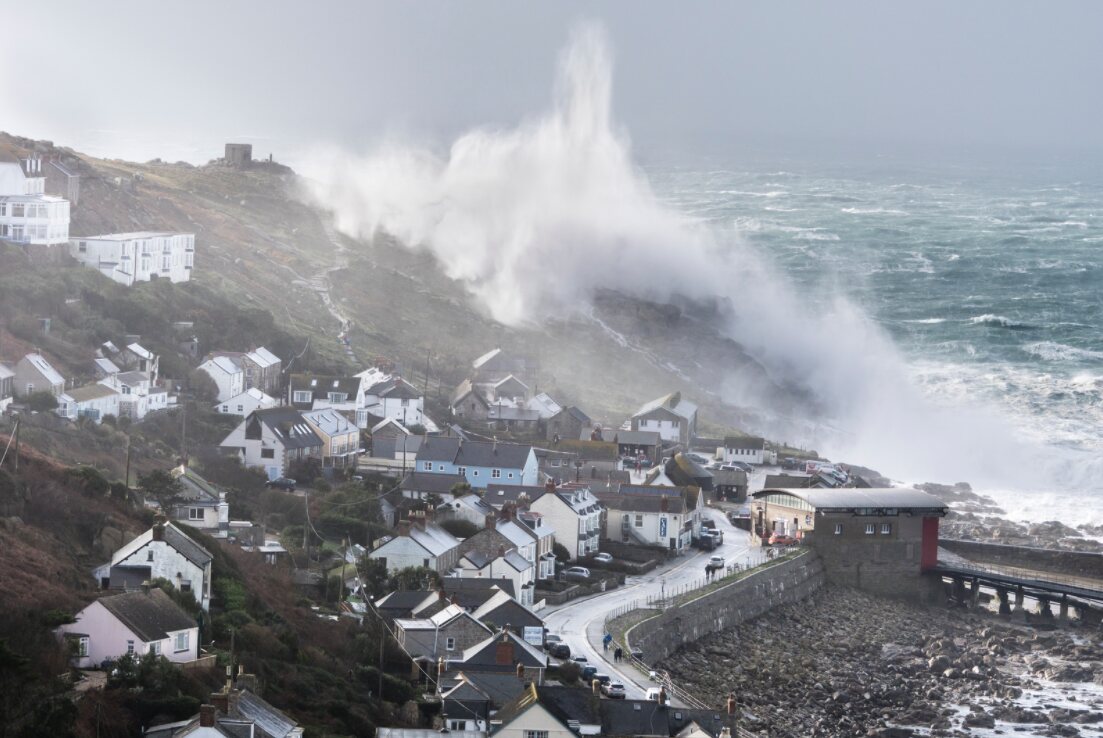
Best from: the cliff path above the village, or the Sennen Cove car park (warm and dry option)
2. Porthleven
Arguably Cornwall's storm capital, or at least its most photographed. When storms arrive there's drama at this south-coast town on the edge of the Lizard. Waves frequently crash over the harbour wall and against the clock tower at the eastern end of the harbour, the iconic Bickford-Smith Institute building that's appeared in countless storm photos over the years.
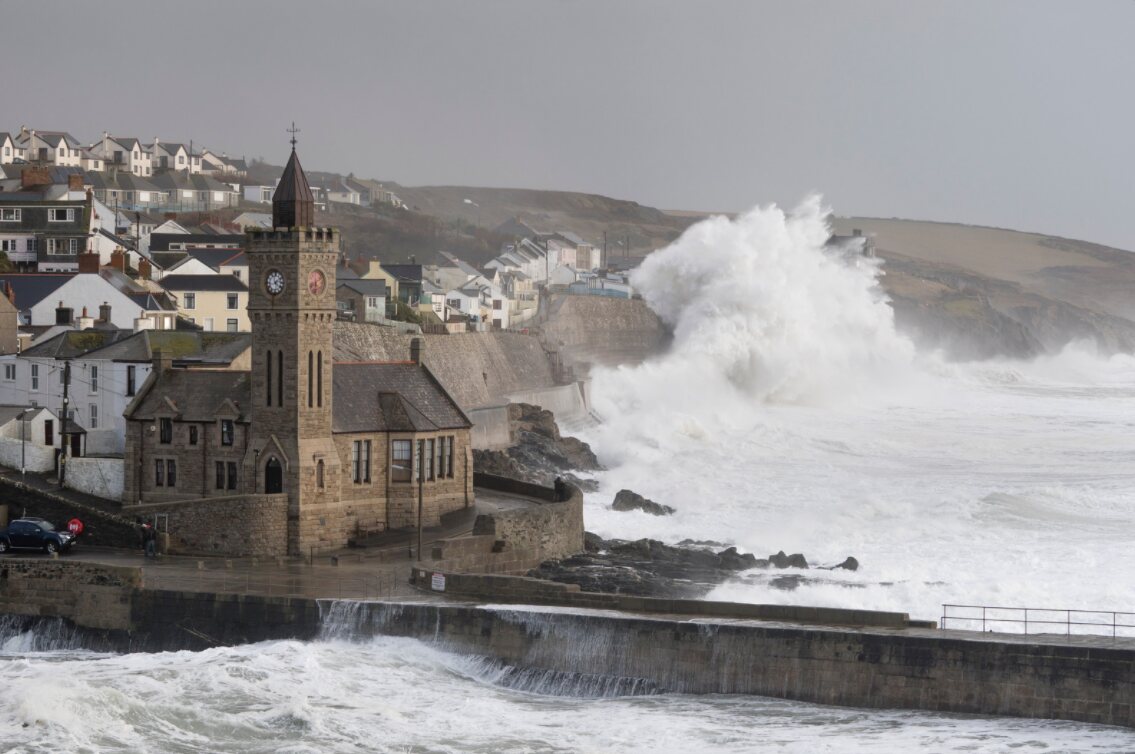
Best from: the harbour-side car park or the road above the inner harbour. Stay back from the harbour wall itself, this is where most rogue-wave incidents happen.
3. Mullion Cove
The Lizard Peninsula faces west and gets the full brunt of Cornwall's autumn and winter storms. Mullion is the largest village on the peninsula, but its small harbour at the foot of the village can get dwarfed by huge storm swells crashing over the harbour walls. The cliffs surrounding the harbour give you a relatively safe vantage point to watch from above.
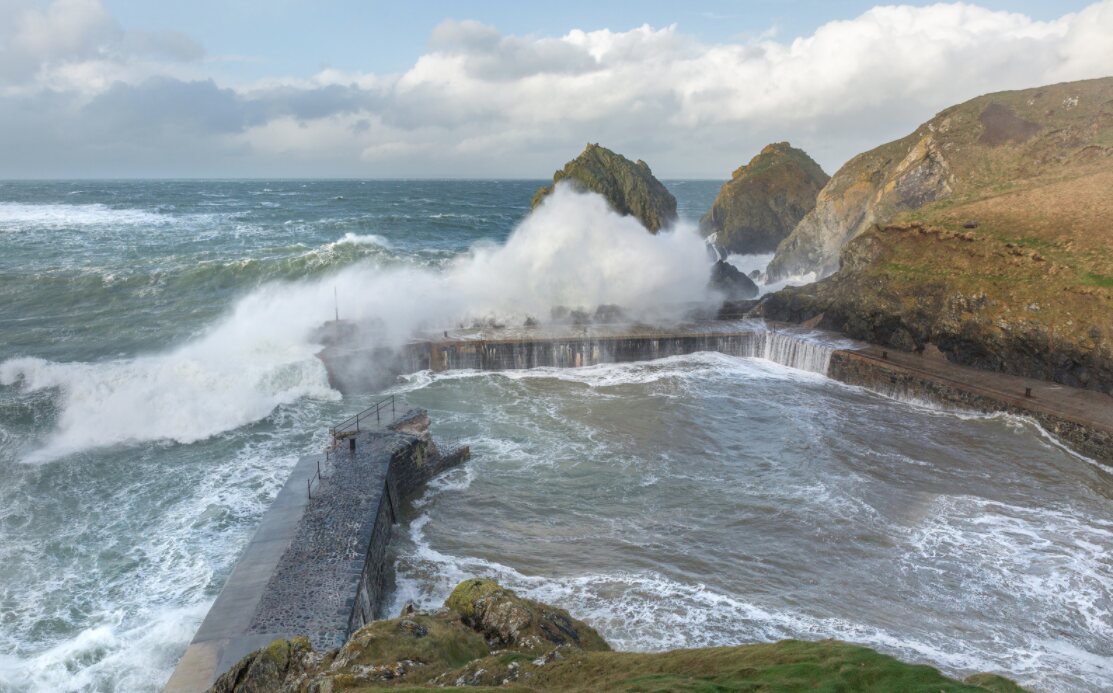
Best from: the cliff paths above the harbour. The National Trust car park is a few minutes' walk from the cove.
4. Bedruthan Steps
Bedruthan Steps offer an otherworldly view at any time, but they're at their monumental best with storm waves crashing at the foot of the giant rock stacks dotted across the shoreline between Newquay and Padstow. The clifftop path gives you elevated panoramic views across the whole stretch.
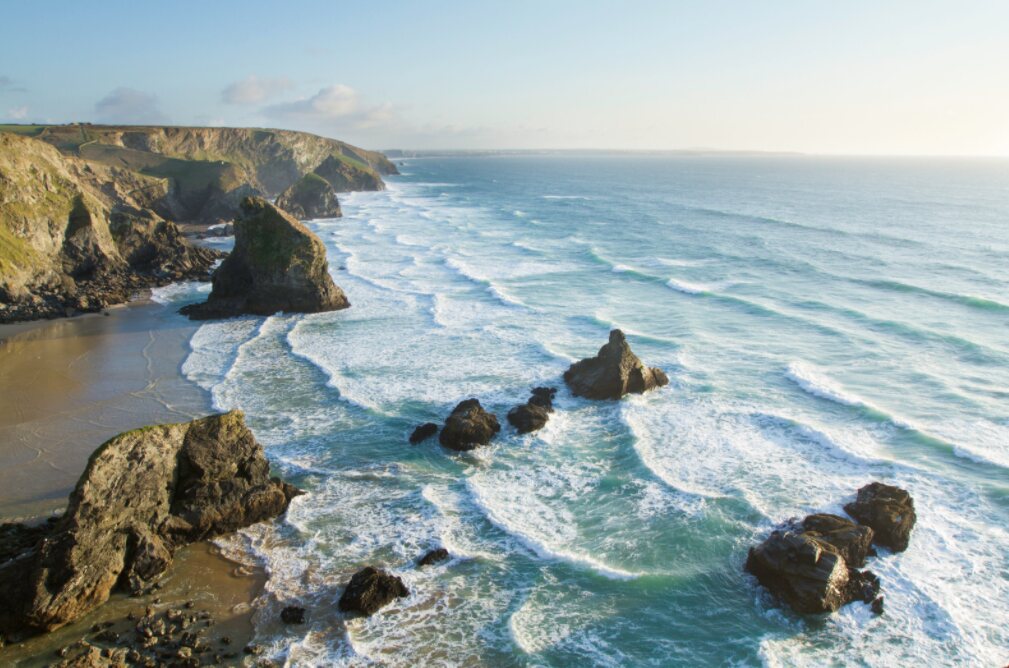
Best from: the National Trust clifftop path. The car park has a cafe and is well-positioned for the views.
5. Land's End
England's most westerly point earns its place. Panoramic ocean views on three sides, with the Longships Lighthouse offshore acting as a focal point for any storm-watching photo. Land's End is a truly epic setting for watching Mother Nature unleash on the land.
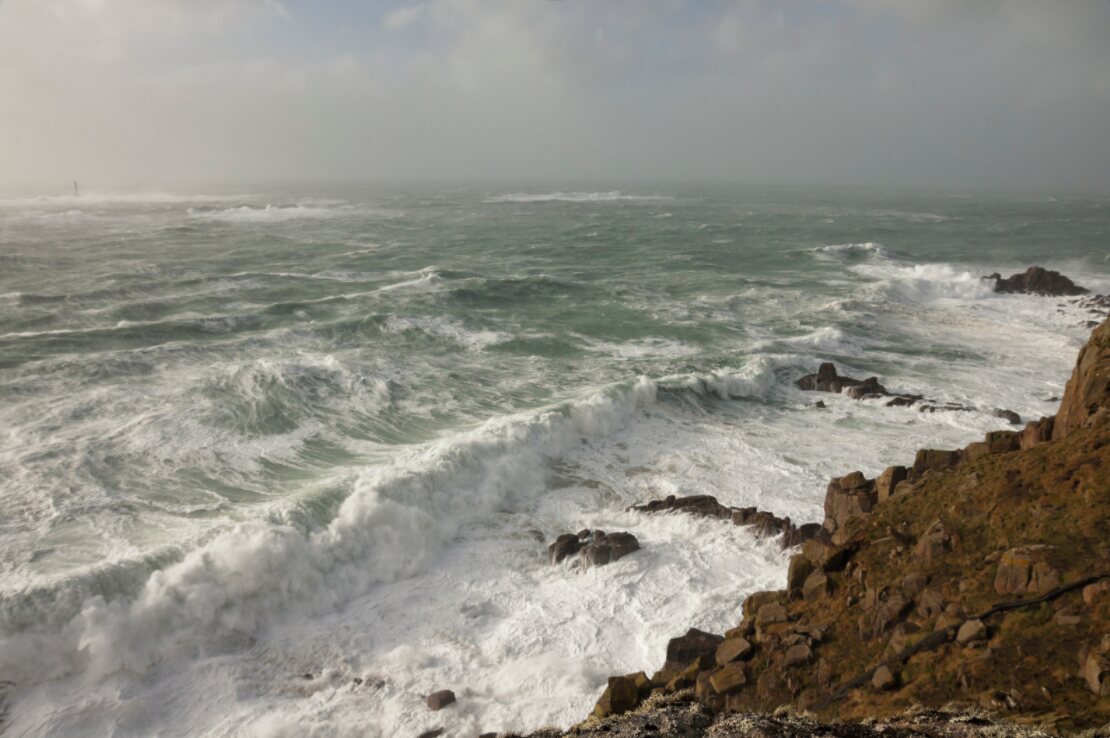
Best from: the visitor centre car park (warm option) or the cliff path either side. The clifftops here are exposed, sturdy boots and serious wind layers required.
6. Botallack
Famed from its appearance in the BBC series Poldark, and framed by thousands of photographers over the years, Botallack mine's rugged beauty during a storm is hard to beat. The two Crowns Engine Houses perched on the very edge of the cliffs above the Atlantic make a dramatic foreground when waves explode against the rocks below.
You can only imagine what it must have been like for the miners turning up to work when storms rolled in. Legend has it the miners working the underwater tunnels (which extended over a mile out under the seabed) could hear the rocks rolling along the ocean floor above them during heavy weather.
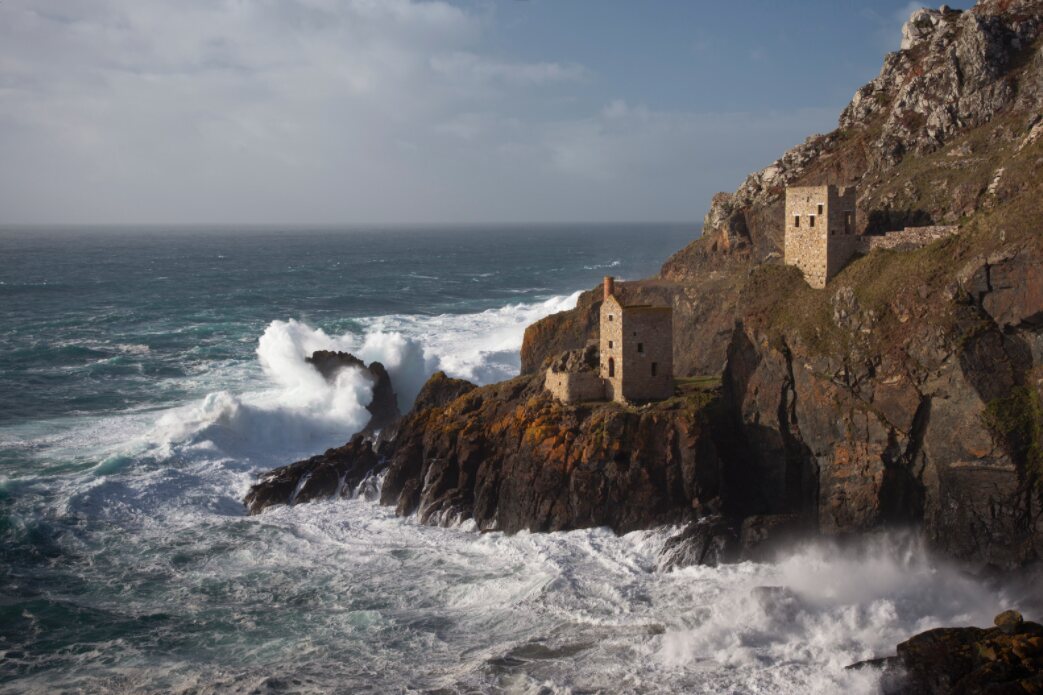
Best from: the Botallack car park and the National Trust path along the clifftop. The Count House Workshop cafe is nearby for a warm-up.
A final word on safety
Storm watching is one of Cornwall's great winter pleasures, and it's worth doing properly. Watch from a safe distance with high cliffs at your back, never from harbour walls, slipways or exposed rocks. High winds and high seas can change in an instant, debris gets thrown around, and rogue waves arrive without warning. Several lives are lost each winter to people misjudging the line.
Stay back, dress for it, and let the Atlantic do the work.
Frequently asked questions
When is the best time to storm watch in Cornwall?
October to March. Atlantic depressions track across south-west England most reliably between late autumn and early spring, with November to February the peak. Time visits around weather warnings on the Met Office website. Spring tides amplify the wave heights and can be checked via tide tables.
Where is the best place to watch storms in Cornwall?
Porthleven is the most photographed and most consistent. Mullion Cove and Botallack are dramatic but more exposed. Bedruthan Steps gives elevated panoramic views from a safe distance. Land's End and Sennen suit those wanting the full Atlantic-edge experience. Always watch from a safe distance with high cliffs at your back.
Is storm watching in Cornwall safe?
It can be, with caution. Stay well back from cliff edges and harbour walls, never go onto exposed rocks or slipways, watch out for rogue waves that can hit twice the height of average swell, and always check tide times. Several people are seriously injured or killed each winter on the Cornish coast through misjudging conditions.
What is a rogue wave?
An unexpectedly large wave that hits well above the average swell height, sometimes two or three times higher than the waves immediately before or after. They strike without warning and have been responsible for fatal incidents at Cornish storm-watching spots, particularly along sea walls and exposed slipways. Always assume they can reach you and stay back accordingly.
Can you watch storms from a car?
Yes, in many places. Porthleven's harbour-side car parks, Sennen's village car park, the Land's End visitor centre, the Bedruthan Steps National Trust car park and the Botallack car park all offer good views without leaving the vehicle if conditions are too rough to stand outside. A safe and warm option for serious gales.
Where can I stay for a storm-watching trip?
Trewena Cottages near Falmouth is a sensible base for visiting any of the six locations on this list. The Lizard's Mullion Cove and Porthleven are the closest (under 30 minutes), with the western locations 1 to 1.5 hours away. Out-of-season cottage rates are at their lowest from November to March, the storm season. See our reasons to visit Cornwall in winter for the wider context.
What should I bring for storm watching?
Waterproof outer layers (storm spray reaches further than you think), warm layers underneath, a hat, gloves, sturdy waterproof boots, and a phone or camera in a waterproof pouch. Bring a thermos for between sessions. Avoid umbrellas, the wind will destroy them, and avoid taking small children to the most exposed spots.
Are storm-watching spots dog friendly?
Yes. Cornwall's beaches lift their summer dog bans between October and April, which coincides with storm season. Keep dogs firmly on the lead near cliffs and harbour walls, and don't let them onto exposed beaches or slipways during high seas.
More on Cornwall in winter
For the wider winter picture, see our reasons to visit Cornwall in winter guide. For winter walking on the cliffs that face these storms, the best South West Coast Path walks in Cornwall points to the most dramatic stretches. For the Cornwall weather context (mild winters, Atlantic depressions, why these storms hit so hard), see our Cornwall and Falmouth weather guide.
Tags
Stay in touch
Occasional Cornwall updates from Rich at Trewena. Around four times a year, never more.
Planning a trip to Cornwall?
Three one-bedroom cottages on a smallholding on the edge of Falmouth. A genuine Cornish base for couples and singles.