Exploring Carn Brea Castle and the Basset Monument: A Journey Through History

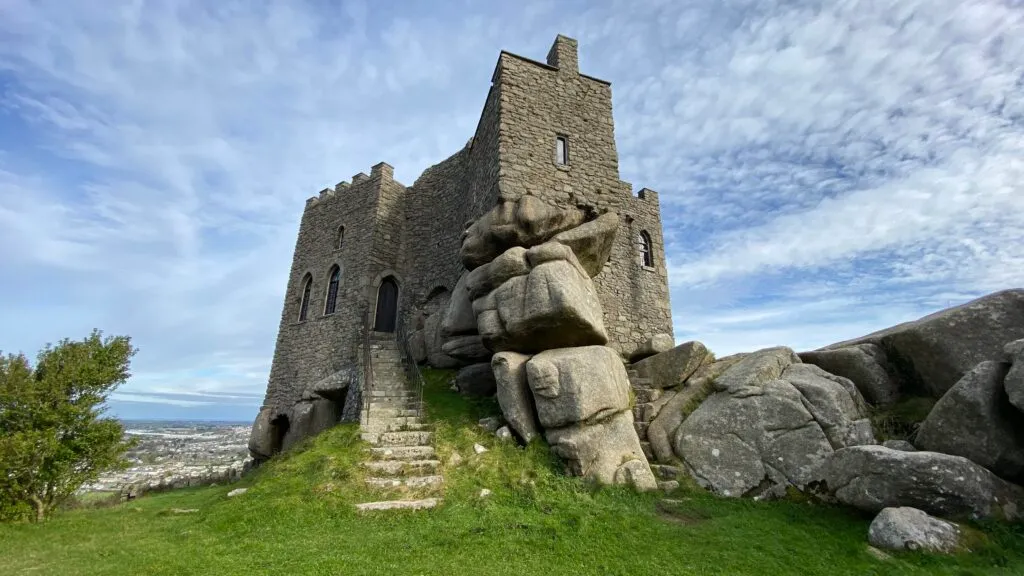
Carn Brea Castle and the Basset Monument crown a granite hilltop just outside Redruth, a short drive from Falmouth and one of west Cornwall's most distinctive landmarks. Visible from the A30, the castle and the 90-foot obelisk together tell six centuries of Cornish history. A short, steep hike up the hill is rewarded with sweeping views across mining country, all the way to the Lizard on a clear day.
Getting there
Park at the base of Carn Brea hill, accessible via Carnkie or the Carnkie Road from Redruth. From the car park, a well-marked footpath leads up to the summit. The hike is short but steep, around 15 to 25 minutes depending on the route, and rewards you with dramatic granite outcrops and views in every direction. The path winds through gorse and heather, with the castle appearing through the rocks as you near the top.
History of Carn Brea Castle
Carn Brea Castle dates back to the 14th century, originally built as a hunting lodge for the Basset family, who were prominent landowners in the area. Significant changes were made in the 18th century, transforming it into the structure we see today. The castle's unique design, irregular granite blocks and crenellations, gives it an almost fairy-tale appearance perched on its rocky pedestal. Despite the appearance, it has a varied past, serving over the centuries as a hunting lodge and as a refuge in unsettled times.
Exploring Carn Brea Castle
The castle's commanding hilltop position is the first thing that strikes you. Surrounded by rugged granite outcrops, it offers breathtaking views in every direction. The castle is now a private restaurant, so the interior is open to diners rather than visitors, but the exterior is freely accessible and worth the walk in itself. Standing among the granite, you can see across mining country to the Lizard on a clear day.
The Basset Monument
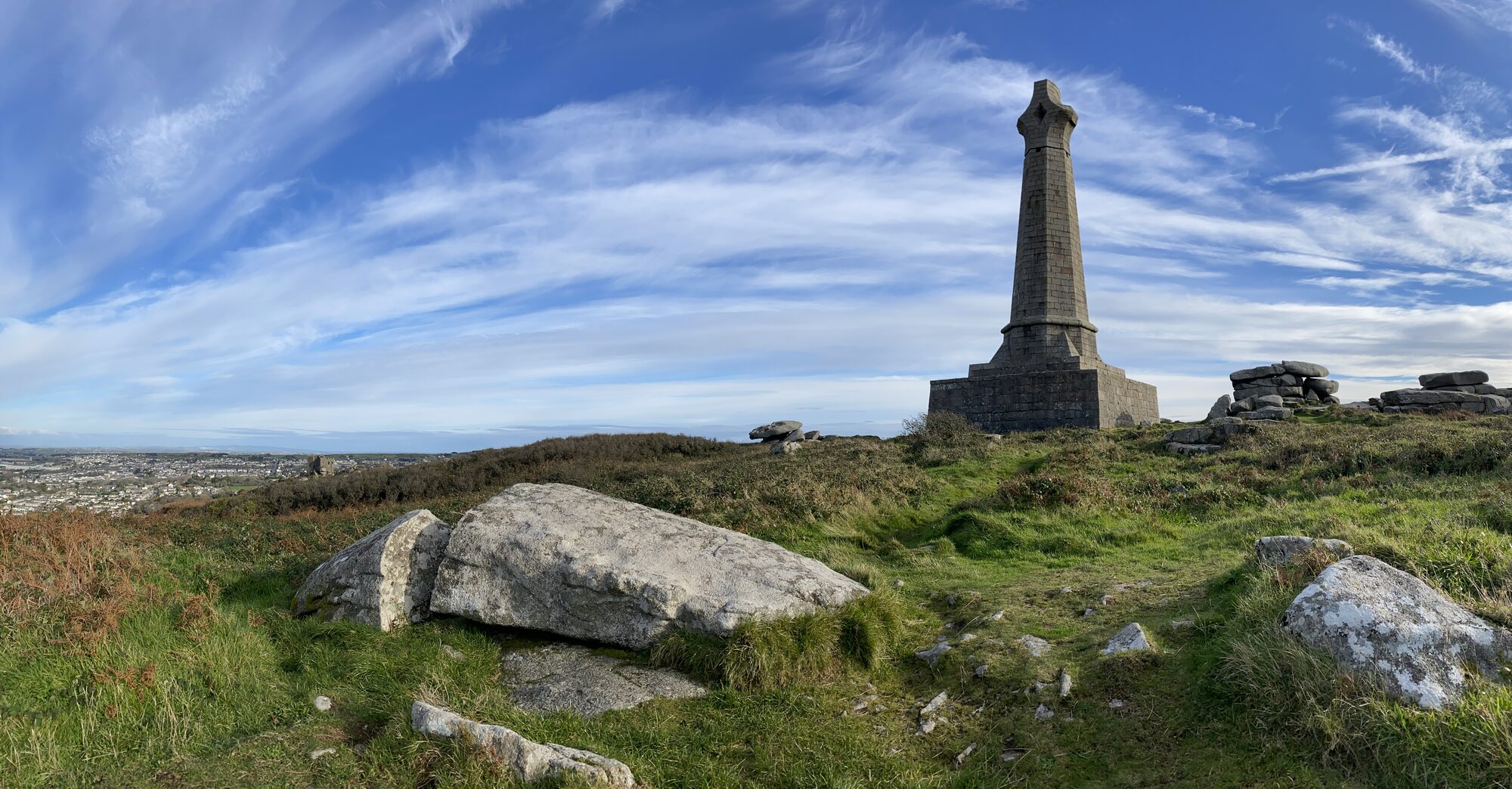
A short walk from the castle stands the Basset Monument, a towering granite obelisk erected in 1836 in honour of Francis Basset, 1st Baron de Dunstanville and Basset. He was a major local mine owner and a philanthropist who contributed substantially to the welfare of the workers and community on his land. The obelisk, around 90 feet tall, is an impressive sight and a testament to the Basset family's lasting impact on the region. From the base you can see the full sweep of mining country that defined Cornwall in the 18th and 19th centuries.
What to do there
Visiting Carn Brea Castle and the Basset Monument is not just about the historic structures. It is a chance to spend an afternoon in some of the most distinctive landscape in west Cornwall.
- Hiking and walking: the trails around Carn Brea offer fantastic options. Paths vary in difficulty, suiting both casual walkers and seasoned hikers. The full circuit of the summit is around a mile.
- Photography: dramatic landscapes and historic architecture make Carn Brea a photographer's favourite. The monument against a sunset, or the castle against scudding cloud, both work.
- Picnicking: pack a picnic and take it to the top. The summit has dozens of natural perches between the granite outcrops.
- Bird watching: the hill and surrounding moorland are home to ravens, kestrels, skylarks and the occasional buzzard. Bring binoculars.
- Historical exploration: read the plaques and the interpretation boards. Understanding the context, especially the mining heritage, makes the place hit harder.
Frequently asked questions
Where is Carn Brea Castle?
Carn Brea Castle sits on top of Carn Brea hill near Redruth in west Cornwall, around 30 minutes' drive from Falmouth or 25 minutes from St Ives. The hill rises to 226 metres above the surrounding mining country and is visible from the A30 as you approach.
Can you go inside Carn Brea Castle?
The castle is a private restaurant rather than a public museum, so the interior is open to dining customers only. The exterior, the rocky outcrops around it, and the Basset Monument nearby are all freely accessible to walkers, with paths up the hill from car parks at the base.
How do you get to Carn Brea Castle?
Park at the base of Carn Brea hill (there's a car park accessible from Carnkie or from the Carnkie Road side near Redruth) and follow the signed footpath to the top. The hike is short but steep, around 15 to 25 minutes depending on your pace and which path you take.
What is the Basset Monument?
The Basset Monument is a 90-foot granite obelisk on the summit of Carn Brea, erected in 1836 in memory of Francis Basset, 1st Baron de Dunstanville and Basset, a local mine owner and philanthropist. It commemorates his contributions to the Cornish mining industry and the welfare of the workers and community on his land.
How tall is the Basset Monument?
The Basset Monument stands roughly 90 feet (around 27 metres) tall, including its cross-topped granite shaft. It is one of the tallest monuments in Cornwall and is visible for miles around.
Is Carn Brea worth visiting?
Yes, especially for the views and the history. On a clear day you can see across to St Agnes Beacon, the Lizard, and the southern coast. The walk is short, the granite outcrops are dramatic, and the Castle and Basset Monument together give you 600-plus years of Cornish history in one short hike.
How long does the Carn Brea walk take?
Allow around an hour to walk up, explore the castle and monument, and walk back down. Add longer if you want to picnic at the top or extend along the moorland paths. The summit is exposed, so check the forecast and bring layers.
Pair it with another west Cornwall walk
Carn Brea sits in the heart of mining country, and the surrounding landscape rewards a longer wander. Pair it with a stretch of the Pendeen-to-Sennen section of the South West Coast Path for the engine houses at Botallack and the wild Atlantic edge, or with the Penwith ancient sites at Lanyon Quoit and Men-an-Tol for a deeper trip into Cornwall's prehistoric layer.
Tags
Stay in touch
Occasional Cornwall updates from Rich at Trewena. Around four times a year, never more.
Planning a trip to Cornwall?
Three one-bedroom cottages on a smallholding on the edge of Falmouth. A genuine Cornish base for couples and singles.